Build Log
What changed in each game, and why.
Recently updated
-
Wanderleaf
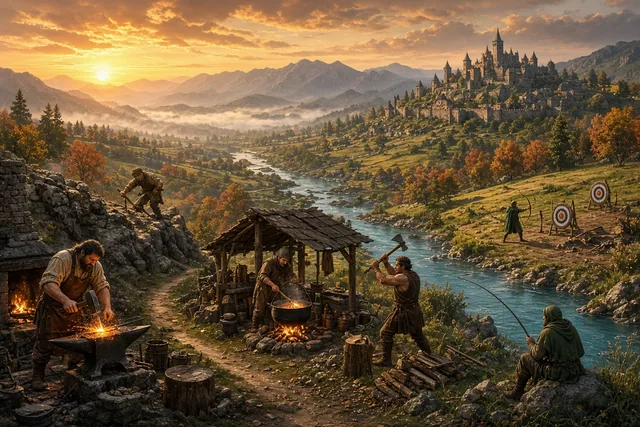
Horses have come to Mapleshire. Hostler Wren keeps a new stable in the south-west corner of town, with three horses in the paddock: Bramble the bay, Copper the chestnut and Mist the dapple grey, 250 gold each. Ride yours from anywhere outdoors with the new Ride button, at a trot as you walk and a gallop as you run. Get down and it waits for you, and it waits at the door when you go into a building or a cave.
105 more from Wanderleaf -
Heated Hoops
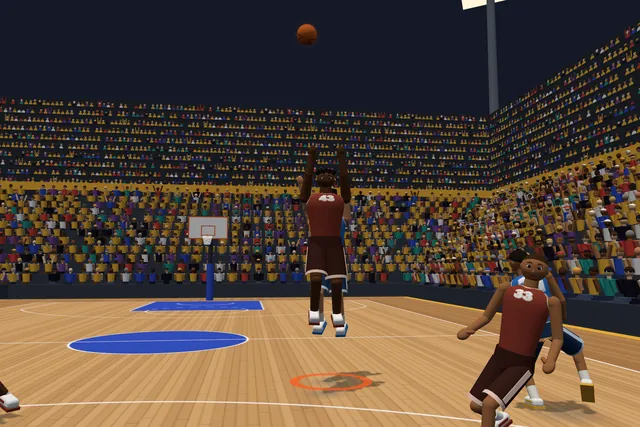
Heated Hoops went up: five on five on a full court, played as one athlete you make. A showcase game in an empty gym brings offers from a league of eight squads, and your role is earned game by game through a 14 week season, the playoffs, and end of year awards. Make three shots in a row and you’re hot: your ring turns orange and your green shooting band widens.
-
Lake Ontario: Island Ferry
The first card and the shift’s card now fit every phone, upright or on its side: they stay below the clock bar, tighten rather than scroll on short screens, and keep clear of the notch.
8 more from Lake Ontario: Island Ferry -
Stackabout
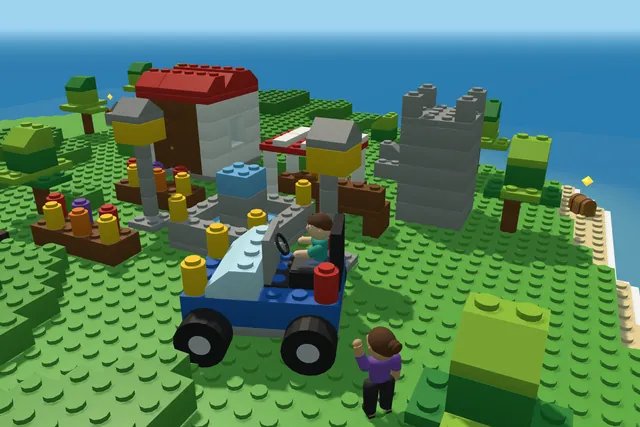
Think pink! Six fresh colours for your bricks, from Pink and Teal to Navy, Dark red, Dark green and Dark grey.
14 more from Stackabout -
Lake Ontario: Fireworks
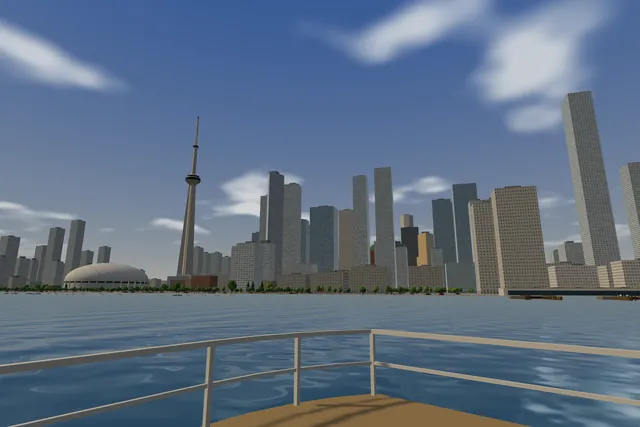
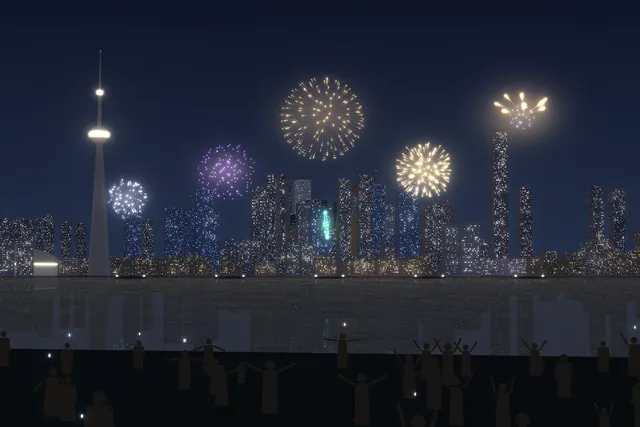
A fireworks show to music over Toronto’s harbour. Every shell takes time to climb, so you fire early and land it on the beat; a bright line shows where it will break. The crowd scores by a printed rule, smoke hides shells fired too fast on a still night, and a finale fires from every barge at once. Watch from the Island, the ferry or the waterfront, or design a show and share it.
Every entry, by game
-
Build 444
Wanderleaf
Horses have come to Mapleshire. Hostler Wren keeps a new stable in the south-west corner of town, with three horses in the paddock: Bramble the bay, Copper the chestnut and Mist the dapple grey, 250 gold each. Ride yours from anywhere outdoors with the new Ride button, at a trot as you walk and a gallop as you run. Get down and it waits for you, and it waits at the door when you go into a building or a cave. -
Build 443
Wanderleaf
The Weekly Climb is here. Once a week, take on the eight keepers again at your highest Ascension under two Omens set by the date, the same for every climber that week. Leave it and start again as often as you like, then finish it once for the climb’s prize, its Summit Marks and 25 more. Each week’s time is kept, and your best Weekly Climb shows on the Ascension Records page. -
Build 442
Wanderleaf
Six Ascension milestones now give titles and rewards: Ascendant at 5, then Highclimber, Cloudwalker, Skybound, Starreacher and Summitborn at 10, 15, 20, 25 and 30. Each brings Summit Marks, and from 10 a gift: a banner colour, a cloak trim, the Starlight aura, a gold pennant on your cairn and, at 30, a crown of light of your own. The new Ascension Records page keeps your fastest climb, fewest potions, highest Ascension and the Omens you have beaten. -
Build 441
Wanderleaf
From Ascension 21, the keepers are Ascended. Each of the eight wears a crown of light in its own colour and has a new move every third turn: Old Mossback’s thorns, Old Honeypaw’s swarm, the Frost Giant’s frost, Thawhorn’s flood, the Ruin Guardian’s flaring stone, the Storm Drake’s lightning, the Aurora Warden’s dazzle and the Withering’s rot. A unique dropped by a keeper there is Ascended one time in four, with an extra affix. -
Build 440
Wanderleaf
Old Brannoch, the Cairnkeeper, has wares now. Spend Summit Marks on an aura of light and motes at your feet, a climber’s cloak with gold, silver, frost or ember trim (the trims also edge any cape you already wear), a new colour for your banner in the Hall of Heroes, or Skye, a snow lynx kitten who walks with you in place of your dog or cat. The Summit Beacon, built by the cairn at camp, adds a tenth to the Marks every climb pays. -
Build 439
Wanderleaf
Climbs now pay Summit Marks: every keeper beaten on a climb earns them, more for each star on your Omens, and a finished climb earns a bonus. Old Ironjaw and the Old Salamander pay extra if beaten along the way. Old Brannoch, the Cairnkeeper, now stands by the Hall of Heroes at camp: he rolls a unique’s affix again, letting you keep the roll you like, or raises a unique a tier. Beside him, a cairn gains a stone for every climb you finish. -
Build 438
Wanderleaf
From Ascension 11, each climb comes with an Omen. Before you ascend, choose one of three: Thin Air halves what potions heal, Dim Lanterns brings dusk to every area and lets foes see you from further, Ironhide gives every foe a guard to break, Restless sends every foe after you, and Hunted sets the Hunter, a great grey wolf, on your trail from area to area. The more stars, the harder. From Ascension 21 you choose two. -
Build 437
Wanderleaf
The Ascension no longer stops at 10. After the Climb come the High Climb (Ascensions 11 to 20) and the Summit (21 to 30), where each level makes every foe 15% stronger, and past 30 there is no end at all: each climb counts up, and the highest you reach is kept. Camp’s Ascension panel shows all four tiers and where you stand. Past 10, the odds of a mythic from keepers and rare foes keep rising a little each level, up to an even chance. -
Build 436
Wanderleaf
The Old Salamander guards three treasures of its own now. Beat it for Emberhide, a coat that heals you each turn while you are below half health, or The Blind Eye, an amulet that lets no foe slip your blows. Rarest of all is The Salamander’s Tail, a club whose every third hit sweeps 1.5x as hard and leaves the foe’s next blow at half. The Deepways have a tune of their own at last: Lamplight Below, a hammered dulcimer over a low drone. -
Build 435
Wanderleaf
The Deepways can be fished and mined now. Cast into the Glimmer Caves’ still pools for blind white fish, or along the Dark Water’s shores for its own catch, the legendary Dark Water Sturgeon among them. Crystal clusters glow in the Glimmer Caves’ caverns: mine them for Glimmer Crystal, and the rock below gives up gems one strike in four. At the anvil, forge the Glimmer Blade or Crystal Mail from them. -
Build 434
Wanderleaf
The Deepways have people now. Old Prospector Abner sits in the Miners’ Rest, his helmet lamp still burning. The ghouls ran him out of the Veins, and he dropped his pick, his ore sack and his spare lamp; bring them back to him. On the Dark Water’s south shore, Lamplighter Odette lights the old lamps, and the mine ghouls snuff them out again. Drive off three ghouls and she lights the whole shore for good. -
Build 433
Wanderleaf
The Dark Water has its keeper. The Old Salamander lies on the island’s warm stones, blind and pale, its red gills fanning slowly. Four cold braziers stand around it. Light them before you fight: for every one burning, its blows land lighter and yours harder. Every third turn it draws its great tail round. Defend and you stand firm; take the sweep and it knocks a brazier out, so light it again or fight on in the dark. -
Build 432
Wanderleaf
The Deepways are no longer empty. Cave bats flit through the Old Workings and under the Dark Water’s fall. In the Glimmer Caves, crystal crawlers pick over the rock, low pale crabs grown over with violet and blue crystal; they leave you be unless you start it. And in the Workings and on the Dark Water’s shores, mine ghouls hunt on all fours: miners the dark kept, their old helmets still on, their lamps long dark, their eyes not. Shepherd Elspeth’s shawl now sits on her shoulders. -
Build 431
Wanderleaf
The Deepways reach the Dark Water. Go down the steps from the Glimmer Caves, or climb down the old well behind the houses in Mapleshire, and you come out by an underground lake, black and still under glowworms like stars. A waterfall roars into it from the dark. An old stone bridge runs out to an island of warm stone, where an altar has a salamander cut into it and something has shed a skin longer than a boat. -
Build 430
Wanderleaf
The Deepways go deeper. Clear the fall of rock in the Old Workings with a pickaxe, or climb down a cave mouth on Cloudberry Fell, and you reach the Glimmer Caves: crystals glowing violet and blue, a hollow of glowing mushrooms, still pools where pale fish turn. Wake the three dull crystals and a bridge of crystal grows across the chasm, to a great geode full of gemstones. Past it, steps go down toward water lapping in the dark. -
Build 429
Wanderleaf
The Deepways begin. On the west side of Beaver Dam Ruins an old mine mouth leads down to the Old Workings: timbered tunnels, rails and carts, a lift, iron and copper to mine. It is dark, and your lantern lights a circle round you. Light the four cold braziers and an iron gate opens on the miners’ pay chest. Past a fall of rock, something glimmers. A keeper’s lair wall now stands in the water too, so there is no way round it. -
Build 428
Wanderleaf
Silvermere now has places only one class can open: five each at Reedshore, the Isles and Ironjaw Deep. A Warrior fells the marked great tree at Reedshore and heaves aside the marked boulders, an Archer shoots down the cages hung high, a Rogue opens the sealed chests, a Cleric cleanses the blighted shrines and a Mage reads open the rune-sealed caches. Each holds gold and materials, and now and then one of Old Ironjaw’s uniques. -
Build 427
Wanderleaf
Old Ironjaw now drops three uniques of his own. The Ironscale Hauberk catches a foe that strikes your guard, so your next hit lands 1.5x as hard. The Spoon Lure, a ring, makes fish bite in half the time and brings rare ones twice as often. Ironjaw, his mythic blade, bites a second time on every third hit. Silvermere has its own tune too, Pull for the Isles: a fiddle and an accordion over the rhythm of the oars. -
Build 426
Wanderleaf
Silvermere has its own fish now. Reedshore, the Isles and Ironjaw Deep each have four of their own from the shore, from the Reed Roach to the Drowned Bell Catfish, each with a dish to cook. Take Maren’s boat out into deep water, well away from any shore, and you can cast over the bow for four more found nowhere else, up to the Silvermere Sturgeon. Her boat holds still while your line is out. Row off and the line comes in. -
Build 425
Wanderleaf
Silvermere has its people. Boatwright Maren at Reedshore lost her new oars and her pot of pitch to a gale. Find them along the far shores and she puts her new boat in the water. From then on the boat at every jetty is hers, lighter to row and steadier in the wind. Out on the Isles, Keeper Bram’s lamp burns low until you row his three cans of oil out to him, and then its two beams sweep the water again. -
Build 424
Wanderleaf
Silvermere has its keeper. Old Ironjaw, a giant pike with old hooks rusting in his jaw, waits in the shallows off the tower isle in Ironjaw Deep. Walk out over the causeway and fight him from the shore. Between his bites he sinks back under the water, where your blows land at half. Defend as he surges up to bite and you catch him at the surface, where your next blow lands hard. When the water goes still, his Iron Jaw is coming. -
Build 423
Wanderleaf
Silvermere has its own foes now. Snapping turtles lie in the reeds along Reedshore and the Isles, marsh gulls with dark brown hoods swoop at you by the jetty, and dusk wisps, cold little lamps of light, drift along the shore of Ironjaw Deep. Each one has a body of its own, and the gulls will come for you if you get close. -
Build 422
Wanderleaf
The Hall of Heroes’ banners now face the path you walk up, their poles behind them. The sealed chest’s iron bands run over its lid and down its front and back, and inside it, once open, there is a little gold. The marked boulder’s X sits whole on its face, and the rune-sealed cache’s slab slides clear and leans against its side instead of passing through it. -
Build 421
Wanderleaf
Every area up the climb now has five places only one class can open: Beaver Dam Ruins, Storm Peak, the Northern Lights Sanctum and the World Tree. A Warrior heaves a marked boulder aside or fells a marked tree, an Archer shoots down a cage hung high, a Rogue opens a sealed chest, a Cleric cleanses a blighted shrine and a Mage reads a rune-sealed cache. Each holds gold and materials, and now and then a keeper’s unique. -
Build 420
Wanderleaf
Three glyphs are hidden in the world: Way, Gate and Far. Find them behind the places only one class can open, or now and then from a keeper beaten at Ascension 5 or higher. Set all three in the right order in an epic or better chest piece at a smithy and it becomes the Wayfarer. Whoever wears it can Blink: tap open ground up to 18 metres away and you are there. A page in the Bestiary gives the order. -
Build 419
Wanderleaf
Your heroes now help each other. Each one at level 20 or more gives every hero more experience and gold, and each class gives the whole household a gift once one of yours reaches level 50: more health from a Warrior, sharper aim from an Archer, more mana from a Mage, stronger potions from a Cleric, more gold from a Rogue. The Hall of Heroes at camp shows a banner for each, and a new hero’s World Map shows what the others have found. -
Build 418
Wanderleaf
Each class has a gift now, on its own button. A Warrior’s Might lands the first blow twice as hard, an Archer’s Far Shot engages from far off with two arrows, a Rogue’s Shadow slips past foes unseen for a sure critical, a Cleric’s Light wards you, and a Mage’s Arcane Sight sets foes burning. Maple Forest and Frozen Lake each hide five places only one class can open: a marked tree or boulder, a cage hung high, a sealed chest, a blighted shrine, a rune-sealed cache. -
Build 417
Wanderleaf
Each class has its own weapons now, in the shops and at the forge: Archers carry bows, Mages staffs and wands, Clerics maces and censers. Another class’s find goes in the new stash chest at camp, now 40 places. Return the Leaf comes only in the story, once the Withering is nearly gone. At the World Tree you kneel and dip your flask in the stream. Scenes open with a clear view, the stick no longer sticks, and a Mage’s opening spell flies to its foe. -
Build 416
Wanderleaf
Ironjaw Deep opens north of the Isles: a dark bay where a drowned village shows at low water, its roofs and chimneys out of it and a bell still in the church tower. A causeway of old stones runs out to a ruined tower, and something big circles under the water there. Also, Storm Peak’s bridge is clear of its standing stone, the palest skin tones are warmer, and the lines on arriving at Frozen Lake, Storm Peak and Northern Lights fit what you see. -
Build 415
Wanderleaf
Hands, legs and feet now suit your class too, so everyone is dressed their own way head to foot. A Mage wears hose and slippers with drawn-up toes, his hands wrapped in cloth, a bead on each toe and a glowing rune on each hand from epic. A Cleric wears pale hose cross-gartered in the tier’s colour, sandals and white gloves. An Archer has leggings, tall boots and bracers. A Rogue wears near-black leather banded in the tier’s colour, with a knife on his thigh from epic. -
Build 414
Wanderleaf
Chest pieces now suit your class too. A Mage wears a robe in the tier’s colour, wide at the sleeves, its hem banded from epic and gold from legendary, with a high collar. A Cleric wears white vestments with a tabard, a gold cross on it from epic. An Archer’s leather is laced up the front, with a hooded mantle from epic, and a Rogue’s is near black with crossed straps. Robes move with your stride. Warriors keep their armour. Hands, legs and feet come next. -
Build 413
Wanderleaf
Head pieces now suit your class, the same gear worn each class’s own way. A Mage’s head piece is the pointed hat itself, its band and brim in the tier’s colour, with stars from epic, a gold crown from legendary and a gem atop a mythic one. A Rogue wears a headwrap, an Archer a feathered cap, a Cleric a circlet that becomes a mitre at legendary. Warriors keep their helms, and uniques look the same on anyone. Chest, hands, legs and feet come next. -
Build 412
Wanderleaf
You can row now. Take the rowing boat at Reedshore’s jetty and head out on Silvermere, or walk on west to the Isles, where open water holds five islands: a lighthouse with its lamp turning, a ruined chapel, a heronry in tall pines, a hermit’s hut and a sandbar where the gulls stand. The stick or a tap rows you, a little slower than walking, and the wind drifts you. Step ashore at any landing and the boat will wait for you. -
Build 411
Wanderleaf
A fix for something you could run into after a fight. When a foe was beaten, it sank away but left an invisible patch behind where it had stood, so you couldn’t walk there. Now that keepers drop their spoils where they fall, that meant you sometimes couldn’t reach them at all. The ground clears as soon as the foe is gone, and a keeper’s spoils can be picked up from a little further off. -
Build 410
Wanderleaf
Silvermere begins. West of Willowmere, once the orchard’s keeper is beaten, Reedshore opens onto a wide still lake. Reeds stand thick in its shallows, swans drift across it and willows lean over the water. A lane runs past a fishing hamlet of three cottages down to a jetty, where a rowing boat waits, tied up. By the boathouse a new boat sits on trestles, its ribs still bare. Nets hang drying on their poles, and the fishing is good from the jetty and the shore. -
Build 409
Wanderleaf
Cloudberry Fell has a tune of its own at last: Heather and Stone, a slow air in three for walking the moor. A fiddle carries it over a drone held low and steady, the way pipes would sound, with a harp turning under it and a soft drum now and then like a walker’s stride. A flute takes the tune up an octave, then it turns through C and D before coming home. -
Build 408
Wanderleaf
Cloudberry Fell has come to life. Shepherd Elspeth grazes her flock by the old drove road, and three of her ewes have wandered off across the moor: find them and walk them home. Antiquary Hollis stands inside the ring of stones, still trying to count them the same way twice. Heather Sprites and brown Fell Hares roam the heather, the tarns hold four fish of their own, and the cloudberries can be picked at last, for a crumble. -
Build 407
Wanderleaf
Wanderleaf has a new line under its name: A Whole World to Wander. The old line pointed at a single goal, the climb to the World Tree. That climb is still there, but the game has grown well beyond it, with side areas to find, the Old Arena, keepers waiting in their lairs and twenty-seven uniques to hunt. The new line says what Wanderleaf has become: a wide world to explore at your own pace. -
Build 406
Wanderleaf
The rest of the uniques are here. The Ruin Guardian, the Storm Drake, the Aurora Warden and the Withering each guard three more, and Boss Rush has three of its own from wave 15: Emberfang, Worldender and the Crown of the Wandering King. From wave 10, a keeper’s echo can drop that keeper’s uniques too. A new Uniques page in the Menu lists all twenty-seven by where they drop, the ones you have not found yet left in shadow. -
Build 405
Wanderleaf
The first twelve uniques are here. Old Mossback, Old Honeypaw, the Frost Giant and Thawhorn each guard three: two legendaries and a mythic, each with its own look and its own power in a fight. Heartwood roots a foe every fourth hit; Glacier Plate chills whatever strikes you; the Beekeeper’s Veil sends bees to sting. Their stats roll within ranges, so no two are alike. A keeper drops a legendary one time in twenty and its mythic one time in a hundred, better with each Ascension. -
Build 404
Wanderleaf
Gear now looks its tier. One colour ladder runs through the hero, the bag, item names and the beam over a drop: common iron grey, rare blue, epic purple, legendary crimson, mythic gold. Each tier has its own finish as well. Common is matte iron; rare is polished steel with a ridge on the helm; epic glows faintly, gems at the chest and brow; legendary adds a short cape; mythic shines brightest, motes of light circling you. -
Build 403
Wanderleaf
What a foe leaves now lies where it fell. Gold and experience still come at once, the coins flying to you, but gear, meat, pelts and other finds wait on the ground in a small pouch, a beam of the best piece’s colour above it. Walk onto it or tap it to take it. An ordinary drop fades after about a minute and is lost if you leave the area, flee or fall. A keeper’s spoils rise where it fell and wait until you come for them. -
Build 402
Wanderleaf
Boss Rush now has a home of its own: the Old Arena, south of camp. A ring of sand lies under tiers of old stone you can climb, eight plinths along the top. Once the World Tree is saved, each plinth holds a keeper’s pale echo. Touch the Trial Stone and the echoes step down one after another, each wave stronger, fought right there in the world. Some health returns between waves; step off the sand to end the run. The Menu’s Boss Rush now leads you there. -
Build 401
Wanderleaf
Lairs lock again on every Ascension: the keeper awake on the climb waits behind its wall, its guards as strong as the climb, the Ruin Guardian’s runes in a new order. A lair stays shut until its area’s quest is done. Lose a fight and your foe is whole again; lose to a keeper and you wake at its lair’s way in. Quest items spread across their areas, beaten foes no longer block the ground, braids hang over the shoulders, and the cleric’s staff stays upright. -
Build 400
Wanderleaf
Every keeper now waits inside a lair of its own, two of its guards at the way in. Old Mossback, Old Honeypaw, the Frost Giant and Thawhorn hide behind hedge, fence, ice and snow, their barriers cut or broken in three places. The Ruin Guardian’s door opens to its four runes touched in the carved order. Storm Peak’s ledge is crossed between gusts, the Aurora Warden’s veil parts while three star-lamps burn, and the Withering’s blight washes away with spring water. Once open, a lair stays open. -
Build 398
Wanderleaf
Rare foes and the daily bounty now stand in the world. Each stage’s rare foe waits in its own area until you beat it, a gold ring at its feet and its name above it, and the day’s bounty stands in the area your climb has reached, ringed in red. Neither wanders or comes for you: walk up, fight it where it stands, and walk on. In the Menu and the Quest log they now say Go, and the leaf shows you the way. -
Build 397
Wanderleaf
Abilities now go to level 10. Past level 4 each costs two points, and levels 5 and 10 bring something of the ability’s own: a third arrow for Split Shot, a longer mark, a trap that freezes longer. Each ability card says what its next level gives. Your fight bar grows with you: four abilities to start, then one more at levels 10, 20, 30, 40, 70 and 100, and heroes you already have keep their eight. A level up now shows what you gained. -
Build 396
Wanderleaf
Every class’s abilities are reworked so each one does something of its own. The Archer marks a foe, looses arrows that keep falling and sets frost traps. The Warrior sunders armour, breaks a keeper’s wind-up with Shield Bash and makes a Last Stand. The Mage calls down a Meteor that lands next turn and hides behind Mirror Images. The Cleric renews and consecrates, and a Miracle raises you when you fall. The Rogue envenoms, exposes and vanishes before a strike three times as hard. Your levels are kept. -
Build 395
Wanderleaf
Past the meadows’ east edge the land climbs to Cloudberry Fell, a high moor of heather and little dark tarns under a wide sky. Old stones stand in a ring on the rise, one of them fallen, a taller stone keeping watch outside, and a cairn marks the top. An old drove road crosses the moor from the meadows to Driftmarsh, rowans with red berries stand in the hollows, and cloudberries grow by the water. It opens once you reach the meadows. Its shepherd and flock are coming. -
Build 394
Wanderleaf
Meltwater Meadows has its people now. Ice-cutter Ingrid waits by her sledge: the early thaw carried her saw, tongs and pick downriver, and they lie on the gravel bars where the water splits. Four fish of its own, from the Gravel Grayling to the Ice-Run Salmon, swim in its pools, with a fire by the water to cook them. Where the ice gives way, the golden leaf brightens. Its tune, “Snowmelt”, is a flute and a fiddle over a harp running like meltwater. -
Build 393
Wanderleaf
Meltwater Meadows joins the climb between Frozen Lake and Beaver Dam Ruins. Crocus Sprites come up through the snow, River Otters slip out of the braids with a fish in their jaws, and white Ermines dart over the drifts. Its keeper is Thawhorn, a great moose with ice in its antlers. Every few turns ice crusts its coat and blows glance off, until a skill shatters it or three blows crack it away; when it lowers its antlers, Defend. Foes further up are a little stronger to match. -
Build 392
Wanderleaf
Meltwater Meadows is new, between Frozen Lake and Beaver Dam Ruins, where the ice gives way to spring. The river runs free again there, braided over gravel bars, with snow still lying in the hollows and to the north, crocuses coming up through it, birches, pines upslope and little meltwater pools. Cross it by the bridge or the stepping stones. For now you walk through it on your way up; its creatures, its keeper and its people come next. -
Build 391
Wanderleaf
Frozen Lake is much bigger now, more than twice the ground it had. Out past its old edges there is a second thawed pool with floes of ice on it and a bench on its shore, more pine woods heavy with snow, more ice crystals and two more spires, and more of the lake’s foes. Its frozen river runs on out to its new edges, and everything that was there is where it was. -
Build 390
Wanderleaf
Heron Fen has a tune of its own now, “Still Water”: slow and misty, a reed pipe over a chord held low like mist on the water and a harp’s ripple, with now and then a deep note under it all, like a bittern booming out in the reeds. A cello takes the tune the second time round. -
Build 389
Wanderleaf
Heron Fen has come to life. Fen Dragonflies and Marsh Wisps drift between the pools, and none of them comes for you. Four fish of its own swim there, from the Fen Perch to the Moonlit Eel, each with a dish. Birdwatcher Bryony keeps a hide on the heron pool’s shore; a gust scattered her notebook over the fen, and three pages are caught in the reeds. Eel-catcher Maud sets her traps by the big pool and is a friend to be made. -
Build 388
Wanderleaf
Heron Fen is new, off the path east of camp and open from the start: six reed pools in a wide, flat fen under a big sky, four joined by boardwalks. Three are crossed end to end; the heron pool has a jetty and a bench. Herons stand very still in the shallows, with weeping willows round the water. Fish from a crossing, the jetty or the shore, pick berries and mushrooms, and, once the climb reaches it, walk on north to Millbrook Orchard. -
Build 387
Wanderleaf
Flour and honey can now be made as well as bought. Wheat, apples and honeycomb are gathered in Millbrook Orchard: Miller Agnes grinds two wheat into flour at the mill, and Beekeeper Barnaby spins a honeycomb into two honey. Meat comes in three sizes: lean from small beasts, raw from middling ones, and a prime cut from the stag, the old boars and Old Honeypaw. Eight new dishes use them, from Hearth Bread and Apple Tart to a Prime Roast, most under a new Kitchen tab in Cooking. -
Build 386
Wanderleaf
The willows have been redrawn. Each one now has a rounded crown, and its long fronds hang from inside it in a curtain that falls most of the way to the ground, where before many of them floated in a ring around the trunk. You will find them round the lake and the pond in Willowmere and by the pond in Mapleshire. -
Build 385
Wanderleaf
Cooking has a new screen and three new staples. Dishes are laid out as tiles, with a Ready tab for what you can cook right now, a tab for each place you fish, and every boost shown as an icon. Salt from camp’s shop, flour from Miller Agnes and honey from Beekeeper Barnaby can go into any dish: salt makes it last a turn longer, flour gives bigger boosts and honey heals more. -
Build 384
Wanderleaf
The climb has been rebalanced now that Millbrook Orchard is part of it. Ordinary foes in every stage after the orchard now match the level you usually arrive at, so the fights there are a real test again, and the gear you find there can be worn as soon as you arrive, a keeper’s prize one level later. The title screen has been redrawn too, with the hero in the new sunglasses. -
Build 383
Wanderleaf
Millbrook Orchard has its people now. Miller Agnes at the watermill needs the sheaves the rooks scattered, and Barnaby keeps the bees by the skeps. There are four new fish to catch in the millpond, a fire by the water to cook them on, and the orchard has a tune of its own. The glasses the optician sells have all been redrawn, with proper frames and lenses that catch the light; arms reach the ears, and the monocle hangs on a fine chain. -
Build 382
Wanderleaf
When you make a new hero you now choose female or male on the first screen, and nothing is picked for you. The townsfolk with women’s names are drawn as women now, with long hair, braids, curls, a bun or a ponytail. -
Build 380
Wanderleaf
Every hairstyle has been redone. Hair now covers the head the way hair does, with a real hairline: Short has a swept fringe, Long falls past the shoulders and frames the face, Curly is curls all round, and the Mohawk stands up from the scalp instead of sinking into it. And the bag is easier to use: potions can be drunk straight from Supplies, brews and elixirs are kept there until you want them, and on a narrow phone the brewing list and the Keepsakes tab no longer run into each other. -
Build 379
Wanderleaf
Every skill now looks like itself in a fight. A Warrior’s Whirlwind spins, Power Strike comes down from overhead, and Fortify braces behind a shield instead of swinging at the foe. A Mage raises a Fireball in both hands and throws it trailing embers, and Frost Nova leaves a ring of frost. Arrows trail sparks and Rain of Arrows falls on the foe; a Cleric’s Smite brings down a pillar of light; a Rogue’s Twin Fangs strikes twice in a green cloud. Heals lift both arms in rising light, and a foe that is burning, chilled, poisoned or stunned shows it for as long as it lasts. -
Build 375
Wanderleaf
Millbrook Orchard joins the climb, between Maple Forest and Frozen Lake, with foes of its own: a Crabapple Sprite, a Hedge Badger and a Mill Rook. Its keeper is Old Honeypaw, a great bear who has been raiding the hives. Every few turns he eats from a honeycomb to heal; knock it out of his paws with an ability, or shake it loose with three blows, and defend when he rears up. A hero already past the orchard finds him waiting there. -
Build 374
Wanderleaf
A new hero has a gentler start. Until level 3, ordinary foes hit softer and have less health, and a health potion heals more than half your health. What you find in Maple Forest can be worn as soon as you find it. And Try Again after a defeat in the open world now puts you straight back into that same fight in the world, not the old battle window. -
Build 372
Wanderleaf
A new place on the way up: Millbrook Orchard, between Maple Forest and Frozen Lake. Rows of apples and pears behind dry-stone walls, a millpond with its watermill turning, a weir to cross by, hedges, beehives and a meadow of poppies. For now you walk through it on the way to Frozen Lake; its own creatures, its keeper and its people come next. The map makes room for it: everything past Maple Forest sits one step further along. -
Build 368
Wanderleaf
Your home’s working pieces, part two. A fish tank holds up to six fish from your bag, swimming in their own colours, and once a day visitors leave coins in its jar. A pet bed gives your pet somewhere to curl up while you’re home, and its first rest each day turns up something it found: dogs dig things up, cats bring things in. -
Build 367
Wanderleaf
Your home’s working pieces, part one. The kitchen’s shelf of jars is now your pantry: every meal you cook at your own stove makes two, and you can eat them from its shelves. At the carpenter’s bench you can make a music box, which plays your home’s tune chosen from the places you’ve been, and a map table, which opens Travel and adds Home to it, taking you straight into your house from anywhere. Shelves in every room now show their jars and books. -
Build 350
Wanderleaf
Travel is now a page of its own, laid out by the journey: the climb’s six areas in order with each keeper’s state and the next one marked, the towns side by side, and the places beyond the World Tree. A map view draws the climb as a trail from camp up to the Tree. Finishing an Ascension now says so, with the climb’s prize on its own card and what the next one brings. Camp’s music should no longer crackle on slower phones. -
Build 349
Wanderleaf
Gardens have grown in the other three towns, each in its own way. Skyreach keeps kale, leeks and purple cabbage behind low stone walls capped with snow, with a cold frame and an alpine rock garden of heather. Driftmarsh raises its beds of cabbages, marigolds, beans and cranberries off the damp ground inside fences of bundled reeds. Timberhold weaves wattle fences round ferns, mushrooms on an old log, herbs with a straw bee skep, and beans. -
Build 342
Wanderleaf
Camp has grown. Its middle is spaced out, so the stalls, the people and the work stations have room around them, and a new crafts quarter to the west holds the leatherworker’s and fletcher’s benches beside a workshop shed, hides drying and a straw target. The path north now meets the edge where you come in from Maple Forest. -
Build 341
Wanderleaf
Each home you buy in a town now has pieces of its own to build: the plans by its door, the places chalked on its floor, and a garden box with its own plot. Building one home no longer furnishes the others. -
Build 325
Wanderleaf
The water now looks like water. Ponds, pools and rivers ripple slowly, catch the light and pick up the colour of the sky, and the ponds have a soft ring of foam at the edge. The holes in the ice on Frozen Lake stay dark and still. -
Build 324
Wanderleaf
The sky got a makeover. It now shades from a hazy horizon to a deeper blue overhead, with a sun and its glow, and clouds drifting slowly by. Northern Lights and the Starfall Expanse have a moon and stars instead. A second ring of hills rises behind the first, with snowy peaks around Storm Peak and firs around Frozen Lake. And the World Tree now stands on the horizon from camp onward, a little nearer in each area as you climb. -
Build 323
Wanderleaf
The ground now looks like what it is. Each area is painted in its own kind of ground: grass, snow, stone, earth, sand, ash or moss. Thousands of tufts of grass, fallen leaves, flowers, mushrooms, pebbles, ice shards and glowing cinders now cover it, depending on where you are. None of it gets in your way, and it stays off the paths and out of the water. -
Build 322
Wanderleaf
The world now has a smoother, softer look. Tree crowns, rocks, hills and people shade round instead of in flat facets, while boxes, roofs and blades keep their edges. The light comes from the sky above and bounces off the ground below, and each area’s sun has its own colour. Shadows are sharper and softer at the edges, and they follow you around. -
Build 314
Wanderleaf
The elementals are made of what they are. They used to share one ball with a ring of shards. Now the Lightning Elemental is a figure of lightning rising out of a storm cloud, its bolts striking the ground; the Starfire Wisp is a falling star with a tail of fire; the Abyssal Current is a spinning whirlpool with eyes; and Kindling, Unionized marches on the spot with its picket sign. If your device asks for less motion, the lightning stays steady. -
Build 311
Wanderleaf
Beating The Withering used to pile every sound up at once: the victory fanfare played twice, a level up and the achievement bells on top, and the finale came in underneath them all, and every sound built a reverb of its own. That was more than the device could keep up with, so it crackled. Now the fanfare plays once, every fanfare and jingle shares one reverb, and the finale comes in a moment later as the bells ring out. -
Build 300
Wanderleaf
Camp has a soundtrack of its own: a waltz on the flute over plucked strings and a soft bass, easing back now and then so you can hear the place itself. And camp sounds like somewhere: the campfire crackling louder as you walk up to it, the creek and the pond each from its own side, wind in the leaves and birds all around. Step into your house for a lullaby by the hearth. All of it is made by the game as it plays, with no recordings. -
Build 298
Wanderleaf
Every building in the towns is a real room now: the Sleepy Owl Inn with its bar, hearth and tables, the bakery with its ovens and bread, the observatory with its great telescope and globe, the lodge with its long table and antlers on the walls, and all the rest, each furnished for what it is. Your own homes are rooms too. And Innkeeper Mabel, who used to freeze the screen when you went to see her, now gives you a room for the night. -
Build 297
Wanderleaf
The houses on the edges of the towns now have rooms you can walk into, and someone living in each: a beekeeper, an old soldier, a painter, a fiddler, a stargazer and more. Each is a friend to make, with their own story, a favourite gift, a favour to ask and a keepsake at the end. The rooms are real rooms, with walls, windows, a floor and furniture, and the wall between you and the camera dips out of the way. -
Build 284
Wanderleaf
Camp has come to life. The vendors each have a proper place now: market stalls with striped awnings, their goods on the counter and painted signs, a forge for the blacksmith and a kennel for Poppy the animal breeder. A new optician sells glasses and shades, and around camp you’ll find a windmill, a well, a garden, hay, carts, lamps along the paths and a stone with the golden leaf set in it. -
Build 283
Wanderleaf
Ascension is now a real part of the game. Once the story is done, camp’s menu explains it and lets you Ascend: the whole world grows stronger, and the six keepers wake again at their shrines, one after another, from Old Mossback to The Withering. Beat them all to complete the Ascension and earn a legendary piece or better, then climb again, as high as Ascension 10. -
Build 279
Wanderleaf
Tapping is clearer: whatever you tap, a creature, a herb, a tree, gets a thin gold outline while you head over to it, and quest items and treasure caches can be tapped now too, even when your finger lands just beside them. Walk or run while you move: push the stick out to its edge to run, or tap the Walking / Running button, which now works while your other thumb steers and remembers your choice. Your dog is shaped like a dog now rather than a ball. -
Build 275
Wanderleaf
The people along the river now have their part in the story. Each says a line once, when its moment comes: Silas the first time he sees the golden leaf, the fishers and scavengers about what's been coming down the water, the World Tree's root-keeper who watched the leaf fall. A golden leaf on someone's name means they have something to tell you. And when it's all over, Silas finally gets to hear how it went, and the story closes with its own ending. -
Build 273
Wanderleaf
The golden leaf now shows itself only when it has somewhere to lead you, and stays out of fights; tap the goal line to call it out. Once the Withering falls it goes home for good: at the World Tree the crown glows gold, golden leaves drift down, and the leaf rests on the bark. Touch it and it will guide you once more: to an unfinished quest, an unopened treasure cache, or fish you haven't caught yet, then fly home. -
Build 271
Wanderleaf
Added fishing to every river: Maple Forest, Storm Peak, Northern Lights and The World Tree each have four fish of their own, and every catch cooks into a dish. Fish from further up the climb give more fishing XP and cook into stronger dishes. The float also lands on open water now: it used to land a little way back toward you from the fishing spot, which suited a small fishing hole but put it on the bank beside a pond. -
Build 258
Wanderleaf
Smoothed the camera into a fight in the world and back out after a win. It glides in over 0.7 seconds, circling the short way to the fight view nearest where it was and easing the picture up clear of the panel, then glides back over 0.6 seconds facing the fight’s way. The old camera eased by a fixed share of the remaining distance each frame, which does most of its moving at the start; a timed move begins as gently as it ends. -
Build 251
Wanderleaf
Leaving the game from inside another page now takes the whole tab with it, where the host page allows it. When the browser’s Back has nowhere to go, a game running inside another page sends the whole tab to the site’s home page instead of loading a page inside its own window. Inside a frame, the page you came from is the page doing the framing, so a game that leaves by loading it opens the site inside itself. -
Build 247
Wanderleaf
Picking berries and the like stopped stalling before the pop-up. Timed, most of the stall was the game setting every rock, tree and bush back onto the ground each time the area updated, though none had moved. Scenery that stays put is now set down once, and all of it again only if the ground itself changes; the pop-up and sound now come before the update. The pause showed where the player was looking; only timing it showed where the time went. -
Build 244
Wanderleaf
Every story boss got a fight of its own, each warning of its big blow a turn ahead: Old Mossback grows a moss shell a skill shatters, the Frost Giant freezes you at three frost, the Storm Drake flies beyond any ordinary blow but an Archer’s or Mage’s, and The Withering’s blight turns heal skills and health potions into harm. A boss loss costs nothing. A boss that grew only with its area fell behind a faster-growing hero, so each is measured against the hero who meets it. -
Build 237
Wanderleaf
Elderheart became Wanderleaf on every screen, and its final boss became The Withering. What the saves are filed under did not change: progress stays under the old storage keys, so every existing save still loads; an export keeps the old signature, which lets old exports import; and the old boss’s bestiary counts carry over. A rename touches two lists, what the player reads and what the data is keyed on, and the second stays put or moves only with a migration. -
Build 212
Wanderleaf
Whoever starts a fight now strikes first. Engage an enemy and one real attack is rolled (it can hit, crit or miss) and shown in the world before the battle opens: an archer takes the bow off the back and shoots, everyone else lunges and swings. An enemy that ambushes you gets its own opening strike as the battle opens. The strike is rolled before it is shown, so the world never plays a hit that the battle then calls a miss. -
Build 210
Wanderleaf
Archers carry the bow on the back, draw it in battle, and hit what they aim at. On this figure the drawing hand cannot reach the string at the bow, so the draw is a push: the string hand sets at the chin and the bow arm drives the bow out, the joint angles solved for each figure. The arrow lands on the enemy’s surface, found fresh each shot, and rides its flinch; a dodged arrow flies over its shoulder. Measuring first saved animating an impossible draw. -
Build 204
Wanderleaf
Moved the Engage button, and made every battle action wait a moment before it answers: 650 ms after an ambush, 250 ms after a fight you chose. An aggressive enemy starts the fight itself on contact, so the battle screen could appear under a thumb already on its way to Engage, and the tap landed on whatever was there. Moving the button was not enough on its own: the new screen also has to ignore the tap that was aimed at the old one. -
Build 203
Wanderleaf
Armour became clothing. Every head, torso, leg, foot and hand item takes its shape from its name: a Cloak is a mantle and a cape, Chausses are mail from thigh to ankle, Bracers guard the forearm and leave the hand bare. Each piece is sized from the part of the body it covers, so one item fits every build. A piece can be in the scene and never seen, so the check fires rays at every piece and counts how often it is hit first. -
Build 136
Wanderleaf
Obstacles are read out of the finished scene now rather than registered by each thing that creates one. Props are built in about a dozen places, and a hand-maintained list would be incomplete from the day it was written. Reading the assembled scene catches everything by construction, including anything added later by someone who never heard of the list. Ground cover is left out on purpose: being stopped by a tuft of grass is worse than walking through a log. -
Build 131
Wanderleaf
Dragging to turn the camera while steering with the thumbstick threw the view somewhere random. One listener tracked a single previous finger position for every finger at once, so a second thumb on the stick was measured against wherever the camera finger had last been: about 43 degrees in a single frame. Only the finger that began a drag turns the camera now. When two controls interfere, the one that changed most recently is the suspect and usually not the cause. -
Build 125
Wanderleaf
Feet sank into hillsides and floated over dips. The ground is drawn as flat triangles about four units apart, while the character’s height came from the smooth curve those points were generated from: two different surfaces, diverging by about 0.28 between points, half a lower leg. The character stands where a ray fired straight down strikes the ground now. When two representations of one surface disagree, the one being drawn is the true one. -
Build 91
Wanderleaf
Equipment showed correctly in menus and in battle but never on the character out in the world. The world model was rebuilt only when the class changed, and putting on a helmet does not change your class. The comparison covers all ten equipment slots now, along with hair, body and skin. A cache key that omits half of what it is caching is not a cache: it is a guarantee that the stale version is the one you see. -
Build 43
Wanderleaf
Hair framed the face down to the exact height the eyes sit at, so a dark slab cut across the eye line. Head-on it read as a normal haircut, because the piece sits side-on to the camera. Character previews turn by dragging now, which is how it was found. Some faults only exist at an angle nothing has looked from, and a preview showing one fixed view is a preview of that view rather than of the character. -
Build 27
Wanderleaf
Standing beside a wandering creature let you fight it over and over. The respawn timer was filed under the creature’s position at the moment it reached you, while the check that lets it return reads the position it starts from, and a creature that chases you is never in the same place twice. It keys on the home position in both now. The timing was always right; the address it was filed under was not. -
Build 16
Wanderleaf
Starting a new game skipped the save picker, and the picker is the only screen that claims a slot, so the game ran with none assigned and every save returned without writing. The boot assigns a slot now whether or not the picker is shown. The failure only exists across a reload, so a save system is not tested by saving. It is tested by returning. -
Build 14
Wanderleaf
Rewrote the opening. The Begin Adventure button was sitting below the fold on a phone and starting out disabled: measured at 1406px down a page with a 915px viewport. New players were landing on a screen with nothing to press. The empty save picker is gone too: a file dialog with no files in it isn't a choice, it's a wall. -
Build 7
Wanderleaf
Moved saves onto their own storage keys. Renaming a storage key silently deletes every existing player’s save, so the old keys are still read and migrated rather than dropped. -
Build 44
Stackabout
Think pink! Six fresh colours for your bricks, from Pink and Teal to Navy, Dark red, Dark green and Dark grey. -
Build 43
Stackabout
Who’s building today? Pick Female or Male at the top of Your look, then dress them however you like. Every hair style works on both. -
Build 42
Stackabout
Shoulders back, chin up! Your builder runs tall now, with no more hunching over on the dash to the next build. -
Build 41
Stackabout
Roll out the welcome mat! The ground takes paint now: lay a stone path up to your door, fill a beach with sand or turn a whole field red. Five new ground colours, and As it was if you change your mind. -
Build 39
Stackabout
Come on over! Pave a road between two neighbouring villages and their folk start dropping in on each other, with your new road drawn on the map. -
Build 38
Stackabout
Road trip! Pave a path of plates from a village well out past the houses and watch its folk take their first stroll down your new road. -
Build 37
Stackabout
Festival season! Make each of a village’s three folk happy, hang three lights round the well, and watch the whole village gather round and hop for joy. They’ll meet there again every evening. -
Build 36
Stackabout
First time here? Pick your adventure. The Island is right there as always, or tap Start in Endless and set off across land that never runs out. -
Build 35
Stackabout
Changed your mind? Redo has your back. Paint now sweeps across walls in one slide, a long press borrows any piece’s colour, Whole build repaints or clears an entire creation in a single tap, and the kits you keep finally get proper names. -
Build 31
Stackabout
The off-road update. Cars park on bushes, rocks and bumpy ground and roll right over them, the shore holds steady as you sail, and the see-through wall trick waits until there’s really a wall in the way. -
Build 29
Stackabout
Your world has started moving. Windmills turn, merry-go-rounds spin while you ride (tap Ride and nearby folk hop on with you), and that flag you found in the first chest finally flutters. -
Build 28
Stackabout
Endless worlds have villages now, out past where you start: three houses by a well, built in their country’s colours. Each village has a name, and greets you with it as you walk in. Three folk live in each, wishing for things you can build them, as the folk where you start do. On the map, each village shows as two little houses. -
Build 27
Stackabout
Where pieces meet, the light softens now: the ground at the foot of a wall, the inside of a corner, the seams between bricks and the underside of an overhang near its wall sit a little in shadow, so builds stand on the ground and brickwork shows its joints. Detail low turns it off. -
Build 26
Stackabout
Tap Jump for a hop, or hold it to jump up onto three bricks. Your figure has ten hair styles now, from a ponytail to a mohawk. -
Build 24
Stackabout
Cars and boats steer any way you push, not in quarter turns, and go faster: up to 16 studs a second on land, 13 on the water. A seat and a steering wheel join the parts, and the car and boat kits carry both. -
Build 347
Cut Corners
A desktop player reported driving through item boxes and getting nothing while the AI collected plenty. Pickup was fine. Every touch control is hidden on desktop and nothing named the keyboard bindings, so the player picked up one item, could not discover how to use it, and `tryPickupItem` opens by returning early if an item is already held, so every box after the first silently did nothing. One missing line of text presenting as a broken mechanic. A key legend now appears on non-touch devices only. -
Build 338
Cut Corners
Dropped parts only ever auto-fitted into an empty slot, guarded by a deliberate note that a slot the player had filled should never be overwritten behind their back. That reasoning had quietly expired: a separate guard in the loot module enforces that every affix is positive, so with no cursed parts and a single kart rating the question "should I fit this?" always reduced to "is the number bigger?", which is arithmetic, not a decision. Strict upgrades now fit themselves and the drop card names the gain. The half of the old rule that still held was kept: a swap carries the outgoing part's stats away with it, so anything mixed stays with the player. -
Build 328
Cut Corners
Item boxes were laid four to a row at fixed fractions of the road, so the same four stretched across whatever width they were on: about 4.3 apart on the default road and 5.9 on the widest, which is where a player notices the row looking thin. The count now grows with the road, four to six, and the fractions are generated so the outermost box still lands where it always did. -
Build 299
Cut Corners
Every racer in the game had blank white eyes. The eye parts were stacked back-to-front (sclera at z -0.16 in front of the iris, pupil and catchlight behind it), so an opaque white sphere hid all three. The pupil sizing work done around build 143 had been correct the whole time and simply never visible. It is the same wrong assumption about which way a character faces that put the inner ears on the back of the head at build 241, four lines away in the same builder. -
Build 294
Cut Corners
Jump ramps were banked using the camber at the start line rather than their own position, tilting one edge of the ramp down into the road on any banked section. The cause was a defensive-looking line: `bankSlopeAt(frame.s !== undefined ? frame.s : 0)`. The frame object never had an `s` property, so the fallback fired on every ramp, on every track. -
Build 291
Cut Corners
Four short dark stubs sat at the corners of every kart's roll cage, attached to nothing. The cage tapers inward (rails at `halfW * TAPER`, TAPER being 0.70), but the corner gussets had been left at the full `halfW` of the boxy cage they were designed for. They were reported three times before anyone found them, because a per-part scan cannot see inside a merged mesh and the kart merges its statics. -
Build 241
Cut Corners
The pale inner surface of every ear pointed backwards. Characters face +z (the muzzle runs out to +0.19), so the inner ears sat on the back of the head, plainly visible from the seat behind them. Portraits render from in front, the one angle that could never show it. -
Build 231
Cut Corners
The four Rumble arenas are tracks, not a mode of their own: `roadHalfWidth` 26 to 34, where every racing track sits between 9 and 16. Generated loops had built broken geometry for weeks. The cause was scale, not shape: at a point spacing near 150, matching the hand-drawn tracks, they build clean. -
Build 229
Cut Corners
Tapping QUICK RACE built the whole track before the browser could paint, so the button sat dead for 488ms, twelve milliseconds off the threshold Google calls poor. It now acknowledges the tap, yields two frames, then builds. The work takes just as long; the difference is that something happens. -
Build 4
Lantern Season
Night targets used to climb by the same step forever, so a deep run ended on arithmetic rather than on play. The step now shrinks every night (+15, +12, +9, +8) and settles at 250 by night 29. A target that grows at a constant rate is a wall with a delay. -
Build 2
Lantern Season
Half the screen sat empty in a game about filling the sky. The board now hangs from the bottom edge and the space above it is the sky: lit lanterns rise into it and stay there until the night ends. It also put the board under the thumb rather than mid-screen. -
Build 98
Trophy Town
Friends come to watch your games now, and to your place in the evening. -
Build 97
Trophy Town
Two more of Trophy Town’s friends have time for you between games. Kofi takes you on at H-O-R-S-E on Pine Street: make one and he has to match it from the same spot, miss a match and take a letter, five and you’re out. And Lou will paint you, if you’ll sit for her for an hour by her easel. Her painting of you goes up on your wall at home. -
Build 96
Trophy Town
Go fishing off the pier with June, or run a lap of the lake with Priya: two new things to do with Trophy Town’s friends between games. -
Build 95
Trophy Town
The people of Trophy Town now ask you small favours between games: a parcel to deliver, a coffee to fetch, an old glove to collect. Each one pays a little and makes you better friends. -
Build 94
Trophy Town
The grounds get stands, scoreboards and walls, and the game gets a new cover: the whole town of sports from above. -
Build 92
Trophy Town
The town’s buildings get real fronts: brick and clapboard, framed windows, shop windows that glow at night, and a Stadium with arches, banners and a grand way in. -
Build 90
Trophy Town
Trophy Town no longer assumes you’re a basketball player. A new town now asks what you played back home: basketball, hockey, baseball, soccer or football. Your first game is that sport’s pickup, the regulars one short, and you start it a level up. Its coach is the first to ask you to a tryout, and your first day’s walk shows you the other five sports from there. Towns already underway carry on exactly as before. -
Build 86
Trophy Town
Players’ feet now stay where they land. The legs had swung on a timer whatever the body did, so a planted foot slid with it. Now each player’s real movement is measured every frame: a planted foot holds still while the body passes over it, and the knees and hips are worked out from the feet, with a new ankle so a foot lies flat with the knee bent. Players lean into curves, step round on the spot, and land on bent knees, lower the harder they land. -
Build 81
Trophy Town
Saving your town to a file is a download, and a framed page without permission to download drops it silently, yet the game said Saved. Now it checks where it is running first. On its own page, or in a frame that allows downloads, it says Saved. In a frame that forbids them, Save can’t be pressed, and it says so. Where it can’t tell, it says where the file should be. A shared kiosk screen doesn’t offer it. A game should only report what it can see. -
Build 79
Trophy Town
At the plate, the pitch that ended an at-bat used to be called twice in one spot, Strike on top of Strike three, and words that came up together landed on each other. Now that pitch is called once, and a new word never appears over one still showing: it goes in just above it, or below with room, and never over the score bar, the hint or the count. Each word had been placed well on its own; they needed placing with each other in mind. -
Build 77
Trophy Town
Hitting was measured over whole games played the way a phone plays them, where a touch and a screen each arrive late by their own amount. A thumb a tenth of a second late reached base about a third of the time. The game began learning your tap: how early or late you had been on average came off before your timing was graded, and was kept with your progress. Your swing’s window grew by nearly a third. The same thumb then reached base about half the time. -
Build 47
Overreach
Returning to the beacon sometimes failed to register and the water took you circling it. The lamp (the bright thing you climb back toward) sits three metres above the beacon, and the trigger sat below it. You had to descend past the object you were aiming at. The zone now covers the whole rig, five metres either side, and it is drawn on screen. -
Early build
Overreach
Rival climbers and a rolling pool of the fallen, so a tower fills up with actual previous attempts rather than decoration. -
Early build
Overreach
Loot and four gear slots. The whole spread from nothing to fully equipped is capped deliberately: a browser game gets first-time players forever, and nobody's first climb should be decided by someone else's two hundred hours. -
Early build
Overreach
The beacon. The game had a climb before this; it didn't have a decision. -
Build 27
Spare Altitude
Four canopies to choose between, and not one of them buys glide. Reaching the far targets is the whole gamble, so a canopy that flew further would turn that decision into arithmetic. What you buy is handling: how hard it turns, what the turn costs in height, and how long the flare lasts. -
Build 25
Spare Altitude
Every run after the first was flown blind (no altimeter, no wind, no flare prompt) because only the first-run path ever put the HUD back. It is restored from one place now, the function every descent passes through. A second caller is a second place to forget. -
Build 8
Spare Altitude
Every landing was a tumble and every score was half. Standing up needed a sink under 3.35 m/s and the canopy could not get below 3.5, so the rule the game printed on its own title screen was unreachable. The tests had checked that the brakes did something. None had checked that the reward they promised existed. -
Build 6
Standing Room
Added a speaker button. Before this, the sound could only be muted with the M key, so on a touchscreen there was no way to turn it off. The button sits in open water between the platform and the players' pads, and it is a page button above the game, so a tap on it never reaches a seat. Muting turns down the master volume instead of only stopping new sounds, so a fanfare already playing stops too. A host can start the game silent by adding ?sound=off to its address, and nothing is saved. One problem only showed up with four players: a browser makes a click only from the first finger on the screen, so with four sticks already held, a fifth finger's tap on the speaker did nothing. The button now listens to every finger itself. -
Build 16
Solid Line
Six new kinds of piece arrived: portals that take a character in at one ring and out at the other, fans that blow things along, a red button that opens a red door, thorns that end the try, seesaws that tip once something rolls past the middle, and conveyor belts. Thirty-seven new levels are built on them. They start early, one every other level from Easy’s seventh, each with a one-line hint, and the harder tiers mix them with the older ideas. -
Build 13
Solid Line
Made for wide screens. On a laptop or monitor the level used to sit in a narrow strip with empty sand either side; now it fills the height of the screen, with the controls in columns beside it and the sky and hills running edge to edge. The first hint says click with a mouse and tap on a touch screen, and the title says what makes the game different: your lines stay where you draw them. -
Build 12
Solid Line
No level is the same level twice any more. Measured against each other, 73 pairs of levels turned out to be near copies, most of them bounce-pad levels drawn the same way round. Every idea can now face either way and comes in several shapes, two new ideas joined, and a level is only let in if it looks clearly different from every level already chosen. -
Build 11
Solid Line
Every tier’s first level is now open from the start, so a new player can go straight to Hard. Until now one chain ran through the whole game, and nobody reached Medium without beating every Easy level first; an Easy that felt samey was the only way in. Easy is also shorter now, and picked for variety rather than ease, with a wall to get over and a catch-both-at-once among its levels. -
Build 10
Solid Line
Hard and Expert levels now need an idea, not just a line. Measured first: two in three Hard levels fell to the first straight line a player would try. Every Hard and Expert level must now defeat those obvious attempts, and new levels are built around ideas: carry a character over a wall, turn it round on a slope, catch both in one V, lob one into a cup, catch a bounce. Two new pieces came with them: striped zones that stop lines, and pink pads that bounce. -
Build 2
Solid Line
Levels are ordered by measurement now rather than by judgement. Five hundred random line placements are thrown at each one and the share that finish it is counted, and that reading sets the order. Hand-ordered, the tutorial came out at 0.67% against 14.83% for a level eight places later: the first level a player met was the hardest of the early set. “I built these in increasing order” is an opinion, and this one was wrong. -
Build 60
Rickety Park
Every ride and stall gained marquee bulbs in a slow chase over a warm pool of light, 36 lamp posts went up along the paths and stepped aside for any ride built over one, a lit arch spelled the park’s name at the gate, the fountain glowed and stars came out. The night turned darker and bluer so the lights carried it. All of it fades in at dusk and out at dawn. -
Build 59
Rickety Park
Logs now float a water course, ride a conveyor up and splash down a chute; the train potters round its line and puffs smoke; the bumper cars drive and bump. Every ride turns at a set speed per second, and a broken ride stops, smokes and shows its lamp on top. -
Build 56
Rickety Park
Each coaster now runs a closed circuit of real track: the Steel Coaster climbs a lift hill, drops into a vertical loop and banks home, and the Rattler rattles over camelback humps on a timber lattice. A train runs the circuit, crawling up the lift and racing down the drop. When a coaster breaks down, its train stalls halfway up the lift until a mechanic fixes it. -
Build 55
Rickety Park
A busy park asked the phone for about 2,450 draws a frame, mostly for shadows: every guest was 28 separate parts and each part cast its own. Parts that never move apart are now merged into one mesh per surface, a guest is six meshes over a soft round shadow, and the tree ring is five instanced meshes. The same park now takes 310 draws. Name tags show up close or when a ride is tapped, and no longer stay behind when a ride moves or goes. -
Build 54
Rickety Park
Every colour was lit as if it were already linear and sent to the screen unencoded, so the grass read near-black. The renderer now outputs sRGB through a filmic tone curve, a sky-and-grass light replaced the flat ambient one, and a sky dome and meadow run to a hazy horizon. Every park starts mid-morning on a 20-minute day, and night is moonlit. -
Build 53
Rickety Park
There was no quick way to silence the park. Music and effects each had a slider in Settings, and nothing else. A speaker by the menu button, or M, now closes one master gain that both run through, so a sound already playing stops at once and both sliders keep their levels. -
Build 50
Rickety Park
A mechanic serviced the one ride they were assigned and nothing else, so a ten-ride park needed ten mechanics and every ride built was a bill rather than a draw. They now finish their own ride, then take whatever is broken and nobody else has claimed. -
Build 48
Rickety Park
A backgrounded tab banks its whole absence and spends it on the first frame back. Five minutes away replayed five minutes of simulation before anything drew, and the park aged while nobody watched. A frame now carries at most 500ms of a 220ms tick, and returning resumes from now. -
Build 43
Rickety Park
Progressive disclosure pass. The incident log stays hidden until the first incident, so its arrival is information rather than furniture. An empty panel is worse than no panel. -
Build 41
Rickety Park
Two rides could never be placed. Tapping one put pointerdown on the hover tooltip and pointerup on the button beneath, and no click fires when press and release land on different elements. The tooltip was information, not a control, so it stopped taking input at all. -
Build 39
Rickety Park
The bottom bar docked properly instead of floating 118px up and forming a third band of interface across the park. -
Build 36
Rickety Park
Responsive layout. The previous build had no media queries at all: every position in the interface was a fixed desktop coordinate. -
Build 82
Six at the Gate
The title screen told the Ronin and the Pyre to “loose through the file”, which is the Huntsman’s move. The hint had a line for each move it knew and gave the Huntsman’s to any it didn’t, and both heroes arrived after it was written. Each hero now carries its own line. -
Build 78
Six at the Gate
The Few are four soldiers, and each holds two attackers. Four stronger bodies alone weren’t enough. Each held soldier is set upon by only one defender, so four took four of the line and the rest fell on the hero. Holding two each is what lets a smaller warband shield you the way six do. They hit hard enough that the four together deal what six do. -
Build 76
Six at the Gate
Your own fallen now leave something behind. Walk over one and you recover 7.5% of your strength, once. A defender leaves nothing. It is deliberately less than the 8.5% each living soldier is worth at every gate, so losing people is never the efficient way to heal. The body stays, with a gold ring pulsing over it, until you take what it carried or press on. -
Build 65
Six at the Gate
A run left in another tab kept the wind blowing. The frame loop stops on its own when a page is hidden, but the ambience is a looping buffer source and buffers do not care what is on screen. Audio suspends on visibilitychange and closes on pagehide, which unlike unload still fires on mobile. -
Build 53
Six at the Gate
Damage numbers drew larger than the figures that threw them. They were sprites living in world space, so a hit near the camera scaled up with everything else. They are pinned to a fixed fraction of the screen now: a damage number is text that happens to be positioned in the world, not an object in it. -
Build 14
Six at the Gate
Sound, synthesised rather than sampled: oscillators and a single noise buffer, so it adds no weight to the file and nothing to download. -
Build 12
Six at the Gate
Staggered the warband's durability across the roster. Six identical bodies engage together, take identical damage and die together: at one value nobody died all run, and a little lower the entire warband vanished inside four seconds. There is no number between those two outcomes, so the fix was to stop making them identical. -
Build 8
Six at the Gate
The focus ring now draws over everything. It was logically correct and completely invisible: at this camera angle the body it marks stands on top of it. A marker that exists to prevent confusion, causing exactly the confusion it existed to prevent. -
Build 6
Far End
The win screen waited for a tap forever, so an unattended screen froze on a result. It returns to the title twelve seconds later and hands both paddles back to the computer, but never while a finger is on the glass. Someone still touching the screen has not left, whatever the clock says. -
Build 2
Far End
A puck placed at rest after a goal reads as a frozen game rather than a serve waiting on you. Drifting it toward the conceding player is worse: drag is slow enough that an untouched puck coasts 260 units across a 200-unit table and scores on them. Serves run sideways instead. -
Build 50
Late Innings
The walk-off. When you win it, the team comes out: six teammates, each in his own number, leave a new home dugout on the first-base side, run to the plate and jump round the hitter with their arms up, while the catcher walks off. The picture comes back from the ball and pulls back to take them in, and the celebration holds four seconds instead of 3.2. -
Build 49
Late Innings
The crowd. The stands were a mosaic of coloured tiles, one box per person. Now each of the 12,144 people has shoulders in a shirt, a head, and for two in five a cap. Seated they sway a little; when the game’s crowd gets loud they stand and bounce, a few for a single, most for a double, everyone for a home run, and sit back down as it fades. -
Build 48
Late Innings
Contact. When the bat meets the ball the game holds the picture for a beat, and that beat was a frame too late: at 60 fps it held the moment 13 ms after contact, with the ball already a metre gone and the bat swinging through nothing. It now holds the contact itself, the ball on the barrel, with a flash where they meet, and the crack is heard then rather than at the tap. Nothing about the outcome or its timing changed. -
Build 47
Late Innings
Plays get more time. A ball in play holds the picture 2.4 s, not 1.5, and every play is retimed to use it: the throw to first is in the glove at 1.87 s, a fly is caught at 1.85 s, the single is picked up and thrown in before the cut, a home run takes 1.9 s to leave. Strikeouts, walks and the time between pitches are unchanged. -
Build 46
Late Innings
Hitting is harder. Your swing is judged on half the window it was, a right guess doubles it, a hit needs a closer swing, and a pitch on the black is harder to square up. A simulated batter with a fair thumb won 96% of his innings at build 45, sitting or not; now 55%, and sitting is worth sixteen points. The visitors’ swing, when you pitch, is unchanged. -
Build 45
Late Innings
The pitcher pitches. He used to stand on the rubber and swing an arm; now he lifts the front knee, strides down the mound, lets go out in front and follows through square to the plate, on the game’s own wind-up clock, so no pitch’s timing changed. The ball leaves his hand 1.91 m in front of the rubber. Knees no longer show skin through the trousers. -
Build 44
Late Innings
The site cover is now drawn by the 3D game: the same walk-off as the 2D cover, from low behind the batter, through a camera the game takes as an input and never sets itself. Drawing it found the wall’s distance markers half-buried in the wall where it curves toward the lines ("330" read "33"); they now lie along it. -
Build 43
Late Innings
The man on first is now the man who got there. The game keeps who is on each base, moved the way it moves the bases, and the 3D puts those hitters there in their own figures. At the cut nobody pops onto a bag: each runner carries on from where he was. A walk is taken at a run, the batter dropping the bat and the forced men running up a base. -
Build 42
Late Innings
Every ball in play is now played out: the shortstop gloves the grounder and throws to first, the centre fielder goes back to the track, the batter runs it out. The game had already decided all of it; the play is made from the hit it recorded and changes nothing. The camera zooms onto the play (or pulls back, on a phone, for the throw across the diamond) and cuts back exactly for the next pitch. -
Build 41
Late Innings
Trophy Town’s people drawn into Late Innings at night, posed from this game’s own state. A 3D camera cannot show the zone the size the 2D does: the people are their real sizes, and the catcher sits between the lens and the plate. So the camera is fitted around what the game reads, and the game’s zone is wherever the 3D one lands, to the pixel. -
Build 40
Late Innings
Between innings the park is a still picture, so it is drawn once into a layer and copied each frame: 1.38 ms a frame down to 0.42 on a desktop screen. A cache key has to name everything the picture is drawn from. This one missed the layout, and a stale park sat a pixel out of register with the players. -
Build 25
Late Innings
His hands slid together through every swing: seventeen pixels apart in the stance, nine at the finish. The two grips were fractions of the bat's projected length, and the barrel foreshortens as it comes round. Hands are physical: fixed distances now, defined once and read by both the arms and the bat. -
Build 19
Late Innings
The visiting hitters reached base on nearly everything they put in play. Nothing was fielding them: good contact becomes a hit, which is fair when you have earned it by hand and brutal when a machine has. A share of theirs is caught now, and only while you are the one pitching. -
Build 6
Yours Now
On this site, nothing takes your game away while the page is open: an untouched seat stays yours, and the result waits for a tap. On a kiosk, an untouched seat still goes back to the computer after ten seconds, so the next visitor finds a fresh game. -
Build 5
Yours Now
On a shared screen in kiosk mode, the game now starts with the sound off and stores nothing, so one visitor's choice never reaches the next. When a visit ends and the game returns to its title, the sound goes off again. On launchwaygames.com the sound switch still remembers your choice. -
Build 4
Yours Now
Sound now has a switch: a speaker in the arena's bottom-right corner, opposite the Launchway mark, or M on a keyboard. Off turns the master volume to nothing, so even a sound already playing stops, and the game stops scheduling new ones. The choice is remembered on the device under yours-now-sound, the only thing the game stores. During play the button sits under the characters, so it never hides one, and tapping it never takes a seat or starts a rematch. -
Build 2
Underhood
The Boneyard was a betting table: stake cash on two dice against Church, 1.9× on a win. It is a reading now. He keeps the table, the dice and the five-cycle tumble, and nothing is staked; he casts for what is below and tells you what he sees. Two of the four omens help and two do not, on purpose: a reading that can only help is a buff button rather than information. The build fails if an omen moves no number, so it cannot quietly decay into flavour text. -
Build 7
Pull Ahead
The lanes became ropes on a lawn, each with a red bow that the stronger side pulls toward itself, and a lane is won when its bow crosses a team's chalk line. The lines sit at 1.09 times the bow's reach (past the furthest an open lane can lean, short of where a won bow rests), so a bow can never show a win the rules haven't given. -
Build 50
Freight Dog
The mountains were cones and boxes, and the ridge you could crash into was a separate rule they only roughly matched. They are now one continuous terrain, shaped to the rule: the saddle is held under the height you must clear, and the notch is open between the gate posts. Across 180 test flights, none that reached the lake was ever drawn inside rock. Scenery that stands in for a rule has to be measured against it. -
Build 49
Freight Dog
A well-flown takeoff unsticks in seventeen to twenty-two per cent less lake. That is not seventeen per cent more cargo: run length rises faster than weight, so the same technique is worth about thirteen per cent in pounds. The heaviest load now spends eight of it, so it has to be flown, not just chosen. -
Build 48
Freight Dog
The approach told you to ease the nose up from the top of the descent, though the window it describes is the last twenty feet. Following it when it appeared put you short of the water. The line now waits until seventy feet. An instruction shown before it applies is not early, it is wrong. -
Build 41
Freight Dog
Flying straight meant holding your thumb on one exact column of pixels; a fraction off centre and the aeroplane wandered wide of the lake. Bank now has a neutral band either side of centre, so roughly centred means wings level. A control that integrates twice needs somewhere to rest. -
Build 7
Freight Dog
Removed the weather system entirely. It added variance to a game whose whole appeal is that the numbers on the load-out screen are trustworthy, and a headwind you could not see coming turned a considered decision into a coin toss. -
Build 4
Five and Ten
A strike now sets off a starburst behind the word in the masking unit's own gold, with the bowler's name under it in their seat colour: one and three quarter seconds for a strike, a little under one and a half for a spare, and a tap skips it. Gold washed out against pale maple, so a dark halo sits behind it. It is a screen effect only: no physics, no camera, and no cost to a ball. -
Build 3
Five and Ten
The lane and the pin deck were two colliders, and the seam a step before the head pin kicked the ball five to nine centimetres into the air with no pins on it at all. They are one collider now, so the ball is dead on the lane and meets the pins at the bounce a real one has. Hops among the pins fell from a median of about twenty centimetres to under one, and three checks now hold that line. -
Build 76
Firehold
Wind swings were announced the instant they happened, but nothing new ignites in the first ten seconds and a swing changes roughly six percent of what burns before the next one arrives. The toast is gone. What carries it now are the cues that last: the arrow, the compass, and the forest leaning downwind. -
Build 62
Firehold
The hose lay had seven passing tests and its button had never rendered once. A rename left a guard checking a name that no longer existed, so it read false forever and the control stayed hidden. -
Build 59
Firehold
The season now ends properly rather than simply continuing. Difficulty ramps only on levers you can see: cabins, fires, wind swing, crew count. A hidden spread multiplier reads as the game cheating, and you cannot plan against a rule you cannot observe. -
Build 44
Firehold
Cut the burnout and replaced it with a hose lay. Lighting fuel ahead of the fire was measured twice and lost twice: a careless backfire cost 20 to 30 points of win rate on four maps out of five, and an action whose worst case is starting a second fire is the wrong thing to hand a player in a game about stopping one. A hose lay has a floor: used badly it wastes time, it does not make things worse. -
Build 12
Firehold
The fire started as one cell in the middle of the map while every anchor sat on the perimeter, so the only legal move was digging a long tendril in from the edge. It now arrives with a burn scar already behind it. Burnt ground was always a legal anchor; the fire simply never offered one. -
Build 46
Bottom Time
Divers killed by a spear vanished instantly, throwing away the clearest sign a hit had landed. Bodies sink now. It took two changes rather than one: both death paths hand the body over, and the routine that snaps every diver to its position each frame skips retired ones. With either missing, the sink runs and nothing moves. -
Build 44
Bottom Time
Reshaped the opening. The first crate arrives sooner and the air warning states itself in words. -
Build 38
Bottom Time
Fixed a fifty-second hole in the middle of a dive that seventeen green test suites had never noticed, because all of them asserted how a dive ended and none asserted what happened during it. -
Build 37
Bottom Time
Rival divers closed to weapon range and then held position, which made them easy to hit and applied no pressure at all. They circle now, steering for a point pushed sideways along a ring around you. No damage or accuracy value changed. A stationary target is a solved one. -
Build 1
Over to You
The secret word was drawn on the screen only while the person drawing held the eye button, on the hand-over screen or mid-turn, and the game handed it out nowhere else: not on the clock or the score. Once a turn ended it was gone from play, kept only to show the room. -
Build 1
Level Table
Balls move in steps of at most 2 mm, and every collision is wound back to the instant the two surfaces meet. On the break the white leaves at 11 m/s, which on a phone is about three ball-widths per screen frame, so without that care a ball could pass straight through another ball or a cushion. It was tested with 420 hard shots, through 6,455 cushion hits and 7,931 ball-to-ball contacts, and nothing passed through anything. -
Build 19
Granite Drift
Rocks left the hand before anyone meant to throw them. `pointercancel` was wired to the same handler as `pointerup`, so every time the browser took the gesture back (an edge swipe, a notification), it delivered the stone. Cancel aborts now. A released pointer and a stolen one are not the same event. -
Build 17
Granite Drift
Added an opponent. Until now you threw both colours yourself, which meant giving up the last stone cost you nothing and the central decision didn't exist. Its difficulty is execution error rather than better judgement, so it misses the way a person misses. -
Build 2
Granite Drift
Stones curved further than any aim could bring them back. The curl had been picked as a magnitude, never measured against the width of the sheet it crosses or the aim range available to correct it. It is bound to both now, so the arc can always be nulled out. -
Build 15
Rule Out
About one setting in thirty at depth 2 was solved before you touched it: its two free examples ruled out every other possibility, so your tests went on a question already answered. The examples are now redrawn until at least one other setting still fits them. Losing also drops you one depth instead of back to the first, so a long run no longer ends in a long climb through easy settings. -
Build 14
Rule Out
The game could not be played from a keyboard. The pieces were not buttons, so a keyboard could run a tray but never load one. They are buttons now: Tab reaches them, the arrow keys move among them, Enter places one and Backspace takes the last one off. One family of settings went too. Its rules could differ from another setting only on one-piece trays, so a player holding the wrong one passed the proof about 39 times in 40. -
Build 10
Rule Out
Gave the machine an owner. It read as cold and arbitrary until one line fixed it: someone set it, and left no note. That makes the two starting examples answers already on the board, and makes a limited number of tests a physical fact rather than a game being stingy. -
Build 6
Rule Out
The same setting turned up twice running, past a guard that was working. It compared names. Two rules can carry different names and do the same thing: "every large piece is hollow" is "every solid piece is small". Generated content must be deduplicated by what it does, not by what it is called. -
Build 65
Heavy Fists
On a wide screen his gloves came out about three times too big for his head, and his power punch covered his face. His body was sized to the ring, but his hands, arms, punches and shadow were sized to the window, which only matches on an upright phone. Everything he draws now reads one stage width: on an upright phone that moved nothing, and a desktop window draws him in proportion. His torso also stopped coiling the wrong way on half his punches. -
Build 64
Heavy Fists
The controls were a paragraph of prose. They are now a picture of the screen: two halves, defend and attack, divided by the head and body line. That line is positioned from LINE_FRAC, the same constant the touch test reads, so a diagram cannot teach a scheme the game does not have. -
Build 63
Heavy Fists
Half of his punches drew the forearm from the wrong shoulder: across his chest, with one guard glove missing. Two expressions decided which hand was throwing, rolled independently, agreeing only by coincidence. When two places must name the same thing, one has to read the other rather than decide again. -
Build 4
Seven Columns
Card size was budgeted for a full king-to-ace column, which almost no hand reaches. Sizing every screen for it cost about 17% on tablets and kiosks, where height is the limit; phones are limited by width and never moved. The budget now fits a realistic deep column and lets the rare one compress its fan. -
Build 2
Seven Columns
Finishing a hand ran two timers: the result screen at 1.3 seconds, the cascade ending at 5.4. Tap through to the menu in between and the second one hauled you back. The screen now refuses to open twice: guarded once where it opens, not at each timer, so any later path inherits it. -
Build 5
Two Alike
Layouts are built by taking pairs off an empty board rather than by dealing tiles and then checking whether the result can be solved. Whether a tile can be lifted depends only on where it sits, never on what is printed on it, so a way through can be laid out before any tile has a face, which means there is no such thing here as a layout that cannot be finished. -
Build 7
Inside the Lines
Inside the Lines went up on the site. A tap pours colour that cannot cross a shape's outline, and drawing starts held inside the lines too, so a page comes out clean with nobody steering. Colour every part of a picture and it comes alive: the fish swims off, the rocket lifts off, the owl blinks. -
Build 4
Fourth Side
A fresh board now sits still for fifteen seconds before the computer starts playing itself, drawn as a bar that empties so the pause reads as a door held open rather than as a fault; it is the only moving thing on screen while the window lasts. Two people arriving together both get a chance to take a side instead of one of them finding a game already under way. A board that still has somebody on it skips the window entirely: that is a rematch, not an arrival, and those people are already here. -
Build 3
Nine Apart
Every puzzle ships only after two separate checks: that it has exactly one answer, and that a person can reach that answer using a written list of solving techniques. All 700 pass both. The second check is the one that earns its keep: a grid can have a single valid answer and still need reasoning no ordinary solver would find, and checking only the first would let those through labelled Expert. They are thrown out instead, which is why difficulty here is the hardest technique a puzzle needs rather than how few numbers it starts with. -
Build 7
Eight Around
The board now turns sideways when the frame it is in is wider than it is tall: fourteen squares across and eight down instead of the other way round. Only the picture turns: the board underneath is the same board, so a game survives being resized mid-play and the squares keep their numbers and their neighbours. In a 960 by 600 window the squares went from 35 pixels across to 58, and the board from 300 pixels wide to 844. Fixing it turned up something that had been broken for two builds: on a computer, right-clicking placed a flag and then immediately took it off again, so flagging with a mouse was impossible. -
Build 5
Eight Around
Holding a square to flag it became the default, and a flag you have just placed now comes off again with a plain tap, while an older one still protects the square it is on. Fixing that turned up something worse: the board only accepted a new touch once the previous one had finished, so a single touch whose release never arrived left the whole board dead and looking like the game had frozen. A new touch now takes over from an unfinished one. -
Build 4
Eight Around
When you lost, the game used to tell you that something else on the board had still been workable. Nothing checked that: the sentence was written once and shown every time. It now works the position out at the moment you lose and says which of two things happened: the square you hit was already obvious from a single clue, or it took more than one clue to see. The same change took your flags back out of the reasoning entirely, because a flag is what you believe rather than what the numbers say, and one wrong flag was enough to make the game draw a false conclusion from it. -
Build 2
Eight Around
The board used to arrive with a patch of it already opened, before anyone had touched it. It now arrives covered, and your first tap makes it: the mines are dealt into the squares outside the one you touched and the ones around it, so a first tap can never be a mine and always opens ground rather than a lone number. -
Build 9
Fifteen Home
The board opens at rest: the starting position, nothing rolled, nothing moving, until fifteen seconds pass with nobody touching it and it begins playing itself. Touching either end deals a fresh board rather than handing over the game already in progress, then waits again before the first roll so somebody can take the other side. Start-up and the reset a host page calls both began a turn the moment the board was created, so it left that state within a second of loading; both leave it alone now and let the board start itself. -
Build 4
Both Hands
Added keyboard control, with W A S D on one side and the arrow keys on the other. The game asks for two directions to be held at the same time, and a mouse only ever reports a single pointer, so on a machine without a touchscreen the line could only be dragged one axis at a time, which is the thing that frays it. -
Build 17
Keep Pace
Obstacles are drawn in the same colours everywhere now, and a change of location leaves a second and a half of clear ground before the next one, with the simplest obstacle first. The colours had been set per location, so crossing from the street onto a rooftop turned the crates grey: the thing you must jump changed appearance at the moment attention was lowest. -
Build 2
Second Card
Every board holds an odd number of pairs, so two players can never finish level. The computer only ever learns a card when it is turned face up, and it forgets older ones the way a person does. A tie needs an even number of pairs, so the board sizes rule it out rather than a tie-break. -
Build 27
Rink Rattle
Česky! The whole game is now in Czech as well as English, chosen by your browser or by the button on the title. -
Build 26
Rink Rattle
Every goal gets a slow-motion replay from behind the net, a celebration on the ice and a roar from the crowd. -
Build 25
Rink Rattle
Seasons are here: name your team and play ten games against five invented rivals while the rest of the league plays around you. The top four make the playoffs, where a tie goes to sudden-death overtime. Every game earns points to make your three skaters faster, harder shooting or harder hitting. -
Build 21
Rink Rattle
Big hits land harder: the game holds the moment of contact, a star flashes where the shoulder meets, more snow flies, and the man hit is snapped back before he goes down. Sticks are held properly through it all, kept low by the checker and dropped flat by the player knocked down. -
Build 17
Rink Rattle
Numbers on the players’ backs, a full crowd in the stands, glass over the boards and skate marks on the ice. -
Build 15
Rink Rattle
Rink Rattle joined the board as three-on-three arcade hockey. Players gained rounded pads, striped sleeves and socks, and goalie masks with cages. A check can hit any opposing skater, not only the puck carrier. Faceoffs became a timing contest: the puck drops after a pause, the first centre to tap as it lands wins it, and an early tap loses. A red light on each net flashes when a goal goes in, so goals at the far end read clearly. -
Build 3
Fly Close
The keyboard now works when Fly Close is played inside another page, as it is here. To stop a phone scrolling or zooming, the game holds back every press on it, and inside a frame that also kept the click from handing the game the keyboard, so the arrows went to the page around it. A click on the game now takes the keyboard. The tests had only ever opened the game on its own, where it already has the keyboard; one now plays it inside a frame. -
Build 1
Fly Close
Before any rock appears, the game checks that a ship flying at 70% of top speed could still get past everything already falling, and holds the rock back if not. In ordinary play the check almost never has to act, so it was tested with three times as many rocks, where removing it let a ship flown along the planned routes crash. A safeguard that rarely fires has to be proven where it does. -
Build 7
Backboard Buzz
Went live with a computer rival that sets its own difficulty: four settings from gentle to sharp, one step sharper after each race you win and one gentler after each you lose. A single fixed rival was either unbeatable for a hesitant player or no contest for a good one, so letting each race set the next finds a player's level without a menu. -
Build 4
Still Air
A normal hill and a large one, two rounds each, four players on one screen. The take-off decides everything: the jumper crouches while the input is held and springs when it is let go, and the let-go is timed from the input event rather than the frame it lands in, so a slow device can't shift the jump. Wind is drawn before the round and held for it. Distance scores against the K-point, and five judges mark the flight with the outer two cards thrown away. -
Build 3
One Each
One Each went live. Every move could be previewed before it was made: tapping a pit lit the path its seeds would take, ringed the pit the last seed would land in, and marked a free turn or a capture, all drawn from the same move the game itself would make. The computer opponent stepped between three levels as a solo player won or lost, and sound stayed off until the speaker was tapped. -
Build 8
Flipper Gap
Flipper Gap went live as one pinball table at a real machine's proportions: a 27 mm ball on a 514 by 1067 mm playfield tilted 6.5 degrees, painted as a mountain pass at dusk, with the river running into the gap between the flippers. The night blues keep the silver ball easy to follow, and How to play explains the plunger, the skill shot and the loop in the words of whatever you are playing with. -
Build 1
Box Lid
A dropped piece locks in only when it lands near its own place: within 45% of a piece, between 16 and 48 pixels, and never more than 49% of a piece. The check looks at that piece's own place and nothing else. Two pieces of plain sky can look identical, and because the reach is under half a piece, one dropped squarely on the other's place simply stays where it was put. -
Build 10
Evening Bite
The last stretch of every fight felt dead: a median of fifteen and a half seconds between a fish coming within landing range and landing. The cause was geometry, not pacing. A fish could be reeled to 1.6 m, and from standing height the dock's own deck hides water nearer than about two metres, so the end of the fight happened out of sight. A fish now stays 2.7 m out, landing starts at 3.2 m, and a beaten fish surfaces for a beat first. -
Build 1
Either Way
Every grid was checked before it was shown: each listed word had to appear exactly once, read in any of eight directions, and no line of letters in any direction could spell anything from a list of English and French words a public screen should never show. For the player, a word that looked found was always the real one, and no grid spelled something it shouldn't. -
Build 7
Picnic Patrol
Ants stopped being worth so much. A player was never short of coins by the middle of a map, which left every other difficulty setting with nothing to push against. What each ant pays was halved, and the first three maps now pay a multiple of that, because they are still teaching. -
Build 23
Local Rules
Local Rules arrived as eighteen holes of mini golf, each built from another game in the catalogue: pins on a bowling lane, curling ice, a boxing ring's jabbing gloves, a hockey goalie, marching ants, and face-up card pairs that pass the ball through. Up to four players shared one screen across four rounds: the front nine, the back nine, all eighteen, or three holes. A ball that stopped in the way of anything moving was set down clear of it. -
Build 6
Clear Cut
Clear Cut arrived. Layers of cake slide back and forth; a tap drops one, and only what hangs over the edge is cut off, so the next layer is exactly as wide as what was kept. Each tap was judged at the moment the screen was touched, not when the next frame drew it, so a drop landed where the layer was when the player tapped. From the fifth cake on, each new cake slid faster, up to a top speed that never rises further. -
Build 16
Pom Pom Nation
Pom Pom Nation joined the board: a town-sized cheerleading game in which you captain an eight-member squad, learn fourteen moves at the Spirit Gym, and climb four tournaments to the National Cheer Clash. Progress saves on the device, and the whole game runs offline from one file. -
Build 11
Aim Off
Every let-go is scored at the moment the finger lifted, not when the page next drew a frame. The game reads the touch’s, click’s or key’s own timestamp and works out where the sight was at that instant. A stamp of zero, one from the future, or one more than five seconds old falls back to now. -
Build 1
Ring True
The hole in the middle is only an eighth of an inch wider than a disc. A disc crossing it stays up until its centre is within 0.29 inches of the middle, where nothing is left under it, and drops only if it is slow enough there. Worked out from the board’s own measurements rather than tuned, it lets the computer’s strongest level sink about two open twenties in three, as strong tournament players do. -
Build 4
Third Trick
The computer players decide from their own cards, the bidding and the cards already played, and nothing else: that view is all they are handed. To prove it, every decision they made over 250 games was asked again with the hidden cards dealt afresh at random, 74,382 decisions in all, and not one answer changed. A separate referee also replayed 36,177 hands and found every card legal and every point scored correctly. -
Build 4
Top Rung
The board was designed here rather than copied. Every candidate layout of seven ladders and seven snakes was measured with exact arithmetic for how long its games run, and the one chosen averages 28.4 rolls for a player alone and 40.1 rolls in a two-player game. The die was checked the same way: a separately written copy of it replayed 960 games, and all 53,731 rolls matched. It never looks at the board, so nobody is ever helped to catch up. -
Build 1
Kinged
Draws were made to apply themselves, because a screen in a waiting room has nobody there to claim one: the same position coming round a third time with the same side to move, or forty moves each with no capture and no man moved. Before either rule ends a game, the panel of the person to move now warns that a draw is coming, so no game stops without notice. -
Build 1
One Short
Every tray was made to pass the solvability rule before anyone sees it: count the pairs of tiles in the wrong order, add the gap’s row on the four-by-four, counted up from nought at the bottom, and if the total comes out odd, the first two tiles swap places. -
Build 3
Lift or Land
At some window sizes the result headline was centred a fixed distance below the top of the sky while it grew with the screen, so its top went off the edge; it is placed by its top edge now. And nobody visibly waved: each passenger's arm was drawn first and the head painted over it. Now the outer arm swings up and out from the shoulder, drawn after the head, on the field and from the basket. -
Build 1
Lift or Land
The hidden word was fixed before the first guess and kept where nothing else in the game can reach it, so it can never be swapped to dodge your letters. Every word was checked against a list of 163 English and French words a public screen should never show, anywhere inside the word as well as whole, because a half-guessed word shows every run of letters it holds, and the right letters in a harmless word could otherwise spell something ugly. -
Build 3
Zero In
A dart can no longer leave from a ring that was never on screen. A click or Space with no ring drawn now picks the dart up instead of throwing it, and for someone playing with the mouse, the ring comes up under the resting pointer as soon as a turn begins. -
Build 2
Quiet Move
The computer gained a top level that plays out every capture before it judges a position: up to six more captures, recaptures or answers to check past its own move, your reply and its next. A level that stops at those three can count a piece as won when the recapture comes one move later, and play straight into it. The top level sees each exchange through, so what it still misses are quiet moves beyond its horizon. -
Build 5
Long Suit
After you tapped an eight, a tap on hearts usually kept the eight instead of naming hearts, and on tablets and computers spades did too. Each tap went to the first tap area holding the point, not the one drawn on top, and the draw pile's area, registered first, sat under those buttons. Now what is drawn on top wins, the draw pile stops listening while the choice covers it, and a near miss inside the choice leaves it open. -
Build 1
Long Suit
Every game ends. When the draw pile runs out, the cards already played are shuffled into a new pile once, never twice. After that, a full round in which nobody can play or draw ends the game, and the player holding the fewest cards wins. Reshuffling every time let one simulated game go on for ever, the four eights going round and round. With one reshuffle every game has to finish, and 6,900 test games at two, three and four players, under all three drawing rules, all did. -
Build 3
Wave Back
Every creature was given a floor before it may duck: 3.2 seconds at the start of a round, and never under 1.6 seconds however quick the child gets. Taps were judged at the moment the finger landed rather than when the screen next drew, so a tap just before a creature ducks still catches it, even on a slow tablet. -
Build 4
Note Perfect
Opening the game no longer scrolls the page around it, and once you click it, the arrows, Space, Page Up and Down, Home and End stay with the game, so playing from the keyboard never slides it out of view. -
Build 1
Note Perfect
Capped the tune at two and a half notes a second, and gave every light on the screen one shared budget: no stretch of just over a second may hold more than three flashes, the limit accessibility guidelines set for flashing light. Taps share the budget, so a finger drumming faster than that still makes each bird sing and glow on its perch, but its halo stays off for that tap. -
Build 2
Luck Aside
The result began splitting the gap between a score and the best strategy’s 254.6 average into the luck of the dice and the player’s own choices, and the three numbers add up exactly on the screen. Luck is measured after every roll against what the position was worth just before it, so over many games it evens out to nothing, whichever way someone plays. A bad game can now be told apart from bad dice. -
Build 42
Represent
Walking up to the Court and tapping Shoot Around started a second frame loop while the first was still running, and from then on the whole world ran twice every frame until the page was reloaded. Nothing looked wrong; it only showed when the loop’s calls were counted against the frames. A loop now starts only if none is running. -
Build 42
Represent
The game’s own confirm lived inside the title screen, so on any other screen it asked an invisible question, and its buttons were only wired once the Settings pane had been opened. Importing a save in-game did nothing, and so did overwriting a slot in a fresh session. It lives at the top level now, wired at load. -
Build 28
Represent
The target zone was drawn in CSS and judged from a variable, and on the harder modes the two disagreed: the marker sat plainly inside the bar and the shot was called a miss. All three lanes now draw the zone from the number that scores it, sweet spot included. -
Build 24
Represent
Made shots stopped short of the net. The rim existed as two constants and only one was updated when the court was rebuilt to regulation size, so every make was aimed 37cm below the hoop. Two names for one measurement will drift; the old one is derived from the new one now. -
Build 21
Represent
Added the sprint race system, and a deep pass in Hoops that changes what defenders have to cover. -
Build 12
Represent
The objective arrow pointed up to 177 degrees wrong, and which way it lied changed with where you stood. It reads the camera's own basis vectors now rather than hand-rolled world angles. The test had checked that a rotation existed, which is not the same as it pointing at anything. -
Build 68
Cross Sea
The title screen now shows the rider on the water you have picked, on the ski you have picked, riding the real swell while the menu waits. Change the water or the ski and the picture changes with it. On a phone the menu sits low to leave the top of the screen clear; on a wide screen the ski waits beside the menu. -
Build 66
Cross Sea
Rebuilt how the sea and everything on it is drawn. The water reflects its own sky, spray and wake are droplets and foam, the ski sits in a soft shadow, the rider wears a vest and helmet in his ski’s colours, and clouds fill the sky. Every change was measured first: light on the ski’s edges helped on the dark waters and hid it on the bright ones, so it is used only where it helps. -
Build 61
Cross Sea
The ski has a soft shadow on the water now, and on the dark North Sea and Dusk waters a thin edge of sky light along its sides. Measured, they made it easier to see there: the share of its outline lost against the sea fell from 43% to 30% and from 52% to 36%. On the bright waters the edge light made the outline harder to see, so it stays off them, and Lagoon, the brightest, has no shadow at all. -
Build 55
Cross Sea
The engine was a stack of oscillators through one filter: every harmonic present, phase-locked, unvarying, which is what a buzzer is. It is a train of firing events exciting a resonant exhaust now. -
Build 54
Cross Sea
The game spoke on every landing, and most of what it said named a mistake. A landing is the heartbeat of a run, not an event. Nothing speaks twice inside two seconds now and the same news waits eight, and the first time each kind of trouble happens it says what to do (MATCH THE WAVE, LAND FLATTER, KEEP IT ON THE PLANE) rather than only what went wrong. -
Build 52
Cross Sea
Landings are scored on how closely the ski matches the wave face, and the only cue was a tint on the handlebars, behind the rider's arms. A strip on the left now shows the face you are about to meet, its clean band drawn at the same 0.25 rad the landing is judged on. One function feeds both, so the cue cannot drift from the score. -
Build 20
Tight Window
Every kick is set before it’s kicked now: hold Kick, let go in the green and lean the stick, and an arrow on the field shows the aim. Then the kicker acts it out, running up to the tee or stepping in to the hold, and now and then a field goal or punt is blocked. On kickoffs the receiving side drops back to block. Handoffs and tosses pass from hand to hand, and an interception is yours to run back. -
Build 19
Tight Window
The stadium sounds like one now. Your crowd murmurs between plays, hushes for your snap, gets loud when you’re on defense (chanting on third down) and rises as a pass hangs in the air or a run breaks free. It roars, groans, gasps and applauds as the play deserves. You’ll hear the referee’s whistle, the pads at the snap, the quarterback’s call and every hit, and the music steps back while a play is live. Settings has a Crowd volume of its own. -
Build 18
Tight Window
Running with the ball looks the part now. Spin turns the runner right round, his back to the tackler, and Juke dips a shoulder the wrong way before he leans hard into the cut. Two new moves join them: Hurdle takes him up and over, harder to bring down in the air and clear of a man on the turf, and Dive puts him out flat, down where the ball reaches, a touchdown if it’s over the line. -
Build 17
Tight Window
The crowd is people now, not blocks: fans with heads, hair and caps, some with their arms up, and rows of them painted on the upper decks. The shoulder pads sit on the shoulders, where they had covered the top of the number on every player’s back. -
Build 16
Tight Window
Each side now has a defense of its own. The same eleven used to play both ways, so a receiver also played corner and Records gave him catches and tackles alike. Now eleven come off and eleven go on when the ball changes hands, with their own names and numbers, and Records splits by who made each play. On their ball you play a man of the defense. -
Build 15
Tight Window
The players are dressed for the game at last: helmets in the team’s colour with a face mask, shoulder pads, and pants to below the knee in place of shorts. The yellow line to gain now shows on the field where the first down is, and steps aside for goal to go and kicks. Your crest sits on the 50, and the light towers glow. -
Build 14
Tight Window
Settings now has Save a copy and Open a copy between games: your season, team and records as a file, to keep safe or to carry to another browser. Opening one asks first and says what the copy holds. With a mouse, the Run call’s card no longer runs past its edge, and a save missing a count no longer shows minus a million passing yards in Records. -
Build 13
Tight Window
The arrow keys, Page Up, Page Down, Home and End now stay in the game. Inside a longer page, Up and Down used to scroll the page and slide the game out of view. Every play’s name now fits its card, where Play-action was cut short. With a punt in the air, the bar under the score says Punt until the whistle. The punter holding the ball is no longer told to hold Throw. -
Build 10
Tight Window
Covering your own kickoff, the teammate you were handed stood where he lined up unless you steered him, with your ring round him, while the other ten ran down the field. Now, with the stick let go, he runs down with them and after the returner, as the computer would, and the stick takes him back whenever you push it. -
Build 8
Tight Window
Practice between games had grown past the studio’s cap. With every part of the team practised, the attack’s effects multiplied out to more than twice their starting strength. They were brought back inside 1.4 times on each side of the ball, so a season’s practice now helps without running away with the game. Practising hands had also turned some broken-up passes into drops; it now only turns a drop or a pick into a catch. -
Build 12
First Bounce
A button beside the sound opened a new menu, to restart the hole in the same wind, start a new round of three or nine holes, switch course or turn the sound off; anything that would throw away strokes asked for a second tap. The courses came to life: birds crossed the sky, gulls by the sea, leaves fell near the trees, boats sailed offshore beyond a lighthouse, dune grass lined the back of the beach and the clubhouse gained windows, a door and a chimney. -
Build 7
First Bounce
The light was redone. A sun now cast shadows: every tree’s shadow fell on the ground, worked out from the same crowns the ball meets, and the golfer and the flagstick cast shadows that followed the swing and the wind, darkening the ground once where they crossed. The sky gained a soft sun, clouds and a hazy horizon that matched the far air, and the hills beyond stood in layers. The palette was balanced to the new light, so flat ground in the sun kept its colour. -
Build 5
First Bounce
A second course arrived: a seaside nine with palms, white sand and lagoons, and the sea down the side of six holes. A ball hit into the sea costs one stroke and is dropped back on dry ground, and the beach plays as sand. The course is chosen with a chip on hole 1, before the first swing. The sea is water exactly where the ground runs under it, so a ball at the water’s edge plays where it lies. -
Build 28
Lake Ontario: Island Ferry
The first card and the shift’s card now fit every phone, upright or on its side: they stay below the clock bar, tighten rather than scroll on short screens, and keep clear of the notch. -
Build 27
Lake Ontario: Island Ferry
Today’s shift: one shift a day, the same for every captain at your rank, with its own best for the day. Choose it on the first card, under your rank; sail it again to beat your score, and tomorrow brings a new one. -
Build 25
Lake Ontario: Island Ferry
Harbour Master opens at 950 as Senior Captain: the evening run, from 5:00 into the dark, with a stiff wind off the lake from the south. The light goes as the board runs on, the city’s windows come on, and lamps on the buoys and the slips show the way in. -
Build 24
Lake Ontario: Island Ferry
Senior Captain opens at 925 as Captain. The board allows a minute less at every dock, and the morning starts in fog that lifts as the hours pass. The forecast says how long it will last, and the big map sees through it. -
Build 23
Lake Ontario: Island Ferry
Captain’s ranks. Every captain starts as Relief Captain; a shift scoring 900 opens the Mate’s mornings, with stronger wind and gusts, and 900 as Mate opens the Captain’s, gustier still with a busier harbour. The forecast names every gust, and none blows past it. Choose your rank on the first card. -
Build 22
Lake Ontario: Island Ferry
Every landing now scores out of 100: how gently she touches, how square she sits to the slip, how centred she is between the wing walls, and whether she left on time. The banner names what cost the most, and the shift’s landing score out of 1,200 is the number to beat. -
Build 20
Lake Ontario: Island Ferry
Long straight runs go quicker now. In open water, tap Faster and the clock runs up to forty times while she holds the heading you gave her. It slows for a boat on a closing course, and at the approach or with land ahead she is yours again at real speed. -
Build 19
Lake Ontario: Island Ferry
Lake Ontario: Island Ferry now plays inside the Lake Ontario app, from lakeontariogames.com, full screen and offline once played. In the app, Settings carries All Lake Ontario games, back to the series page; with a shift under way it takes a second tap, so a shift is never left by accident. -
Build 13
Lake Ontario: Island Ferry
Once the city and the Islands had grown their detail, the harbour became something to look round. A drag on the scene turned the view round the ferry, a pinch or the mouse wheel zoomed, and Reset view brought the game’s view back. The helm and the throttle kept their own touches. On the approach to a slip the game’s camera took the view back by itself, so every landing was judged from the view that shows it. -
Build 18
Heated Hoops
Heated Hoops went up: five on five on a full court, played as one athlete you make. A showcase game in an empty gym brings offers from a league of eight squads, and your role is earned game by game through a 14 week season, the playoffs, and end of year awards. Make three shots in a row and you’re hot: your ring turns orange and your green shooting band widens. -
Build 4
Lake Ontario: Fireworks
A fireworks show to music over Toronto’s harbour. Every shell takes time to climb, so you fire early and land it on the beat; a bright line shows where it will break. The crowd scores by a printed rule, smoke hides shells fired too fast on a still night, and a finale fires from every barge at once. Watch from the Island, the ferry or the waterfront, or design a show and share it.
Why this is public
A feature list says what a game does. This log says how each one got there: what was measured, what changed as a result, and why it mattered to the person playing.
It's public because it's the clearest evidence that these games are maintained, not finished once and left alone.